Loading...
Phytochemistry, biological activities, and toxicological insights into the genus Cyclea (Menispermaceae): A comprehensive review
Al-Ashiqur Rahman Alif
,Imran Hossain
,Fatema-Tuz- Zohora
Abstract
The genus Cyclea (Menispermaceae) comprises about 31 species distributed across southern and south-eastern Asia, several of which are long established in traditional and folk medicine, yet no genus-level synthesis of their chemistry, pharmacology, and safety exists. This review highlights the phytochemistry, biological activities, and toxicology of Cyclea spp., separates within-genus evidence from mechanistic data borrowed from related genera, and identifies research priorities. PubMed, Scopus, and Web of Science were accessed for recent literature on phytochemistry, pharmacology, and toxicity. The genus is chemically unified by bisbenzylisoquinoline alkaloids of tetrandrine, curine, and cycleanine types; tetrandrine is the marker alkaloid of C. peltata; C. barbata additionally yields azafluoranthene alkaloids, a phytoecdysone, and a gel-forming low-methoxyl pectin, and C. gracillima is rich in phenolic acids and flavonoids. Extracts and isolated constituents show anticancer, anti-inflammatory, antioxidant, antiplasmodial, antidiabetic, diuretic, hepatoprotective, and antivenom activities consistent with traditional use. Toxicological data are sparse and partly conflicting: an alkaloid extract of C. peltata gave an acute oral LD50 >2500 mg/kg in mice, whereas values for C. barbata leaf extracts span 617 to >30,000 mg/kg. Tetrandrine is a cytochrome P450-activated hepatic and pulmonary toxicant and a weak genotoxicant, and substitution by aristolochic acid-containing Aristolochia species remains unaddressed. With no clinical or pharmacokinetic study reported, safety margins cannot be calculated. Cyclea is a promising but underexplored source of bisbenzylisoquinoline alkaloids. Authenticated standardized material, bioassay-guided fractionation, rigorous in vitro and in vivo replication, and guideline-compliant toxicology and pharmacokinetics are prerequisites for clinical translation.
Keywords:
Antineoplastic agentsToxicityTetrandrineEthnopharmacologyCycleaBenzylisoquinolinesAnti-inflammatoryINTRODUCTION
Plant-derived natural products remain one of the most productive sources of new therapeutic agents, with roughly one-third of all approved small-molecule drugs being natural products or their direct derivatives over the past four decades [1]. Among plant families, the Menispermaceae (moonseed family) occupy a distinctive position as a rich source of isoquinoline alkaloids and of the dimeric bisbenzylisoquinoline alkaloids (BBAs) [2], [3]. Several BBAs have crossed from ethnomedicine into clinical practice: tetrandrine, obtained mainly from Stephania tetrandra, is used in China for the treatment of silicosis and has attracted sustained interest as an anticancer, anti-inflammatory, antifibrotic and antiviral lead [4,5], and cepharanthine and related dimers from Stephania are being explored for a comparable range of indications [6]. The recognition that bisbenzylisoquinoline alkaloids converge on a conserved endolysosomal–autophagy axis [7], [8] has renewed interest in the plant genus.
Within the Menispermaceae, the genus Cyclea Arn. ex-Wight is placed in the tribe Cissampelideae, alongside Cissampelos and Stephania, based on combined molecular and morphological data [9], a position recently reinforced by analyses of endocarp evolution that integrate extant and fossil taxa [10]. This genus comprises approximately 31 species of slender, dioecious, twining lianas with frequently peltate leaves and the curved, horseshoe-shaped endocarp characteristic of the family [11], [12]. Several species of the genus Cyclea are used as traditional medicine in different systems. The tuberous roots of Cyclea peltata (Lam.) Hook.f. & Thomson constitute one of the two botanical sources of the classical Ayurvedic drug Patha, prescribed for fever, jaundice, dyspepsia, urinary disorders and snakebite [13,14], and its leaves are used as a diuretic [15]. In maritime South-East Asia, the leaves of Cyclea barbata Miers are processed into the mucilaginous cincau hijau or green grass-jelly, consumed both as a cooling food and as a folk remedy for fever, hypertension and gastric complaints [16], whereas C. gracillima Diels is a folk medicine in Taiwan [17] and Cyclea species feature in the ethnomedicine of Yunnan, China [18]. The genus therefore represents an ethnobotanically important but scientifically under-explored branch of pharmacologically active plant families.
Research over the past 15 years has begun to substantiate these traditional applications. Phytochemically, Cyclea is characterized by BBAs of the tetrandrine, curine, and cycleanine types [3]. Tetrandrine is the dominant marker alkaloid of C. peltata [4], and bioassay-guided fractionation has identified it as the principal anti-inflammatory and antioxidant constituent of the root [19]. Phaeanthine, a diastereomeric congener, has been isolated from the same species [20]. C. wattii Diels has been reported to produce curine-type dimers [21], whereas C. barbata contains azafluoranthene alkaloids, a phytoecdysone, flavonoids, and a gel-forming low-methoxyl pectin [16,22,23]. C. gracillima, by contrast, is distinguished by a phenolic-acid- and flavonoid-rich profile [17]. Different plant extracts and isolated compounds from the genus Cyclea have shown anticancer activity mediated by reactive-oxygen-species- and caspase-dependent apoptosis [24], mitochondria-mediated apoptosis [20], and p53-independent cell-cycle arrest [25]. Additionally, anti-inflammatory and antioxidant effects [17], [19], lipoxygenase inhibition [22], diuretic [15], hepatoprotective [23], and venom-neutralizing [26] activities have also been reported. At the compound level, the signature alkaloids display antiplasmodial [3], antifibrotic [27], [28], neuroprotective [29], and broad-spectrum antiviral [7], [8] actions. Beyond medicine, C. peltata leaf material has been developed into fermented herbal shampoo bases and related cosmetic formulations [30,31].
Despite these advances, the evidence base has several limitations. First, fewer than a quarter of the recognized species have been examined, and most reports concern C. peltata and C. barbata and originate from a small number of laboratories in India, China, Taiwan, and Indonesia. Second, the studies are methodologically heterogeneous, with inconsistent use of botanically authenticated and chemically standardized extracts, positive controls, and dose-response designs, which limits comparison across reports. Third, the most detailed mechanistic pharmacology of tetrandrine, fangchinoline and curine has been generated with compounds sourced from Stephania or from commercial suppliers rather than from Cyclea itself [27–29], so its relevance to the genus must be inferred rather than assumed. Fourth, limited studies have investigated the toxicological and pharmacokinetic aspects of Cyclea extracts [4], and no controlled clinical study of any Cyclea preparation has been reported. Finally, the taxonomy of the genus remains partly unresolved [10,32], and chemotypic variability within species [33] means that the botanical identity and chemical profile of the material studied are not always secure.
These gaps are compounded by the absence of a genus-level synthesis. Existing reviews are either species-specific, addressing C. peltata within the Ayurvedic Patha complex [14]; compound-specific, focusing on tetrandrine irrespective of its botanical source [4]; or devoted to related genera such as Cissampelos and Stephania [6,13]. Consequently, studies on the chemistry, bioactivity and toxicological findings of the genus Cyclea have not been critically assessed. A structured overview is therefore needed to consolidate what is known, distinguish direct evidence from the genus Cyclea from mechanistic evidence borrowed from related taxa, and identify the species, compounds and experimental questions that merit priority.
This review addresses such limitations by reviewing peer-reviewed primary literature retrieved from PubMed, Scopus and Web of Science. This study aims to i) compile the phytochemical constituents reported from Cyclea species, with emphasis on the BBAs that define the genus; ii) summarize the biological activities documented for extracts and isolated compounds in vitro and in vivo, together with the compound-level pharmacology of the characteristic alkaloids; iii) appraise the available toxicological and safety information; and iv) critically evaluate the quality of the evidence and highlight the principal knowledge gaps that should guide future research. The scope encompasses all species of the genus for which chemical or biological data could be located, namely C. peltata, C. barbata, C. gracillima, C. wattii and C. atjehensis
OVERVIEW OF THE GENUS AND AVAILABLE EVIDENCE
The literature retrieved focused mainly on C. peltata and C. barbata, and much less is reported for C. gracillima, C. wattii, and C. atjehensis. Some of the plants of the genus Cyclea are shown in Figure 1. The research output originated mainly from India, China, and Taiwan and involved primarily phytochemical isolation, in vitro bioactivity assays, and rodent models.
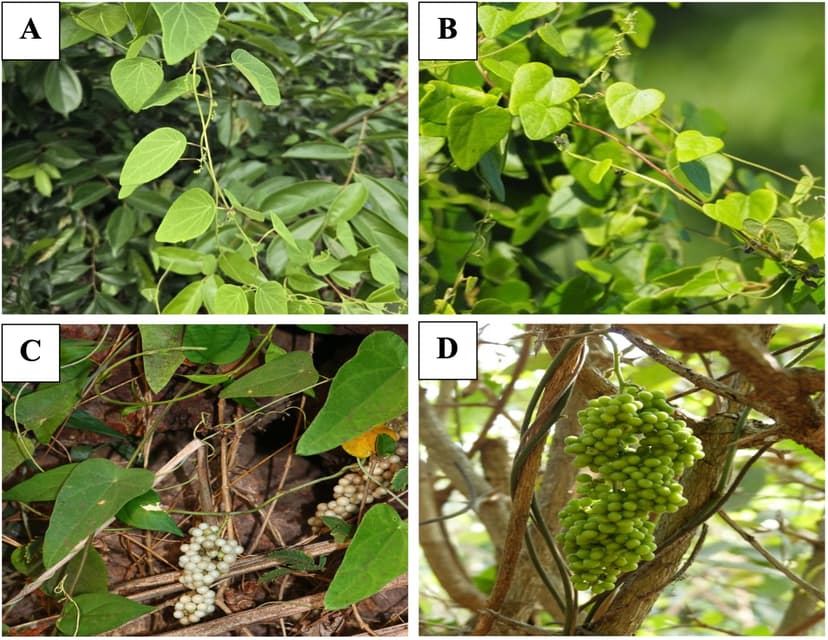
Figure 1. Morphological characteristics of some Cyclea species. (A) Leaves of C. barbata Miers [34], (B) Vining stems of C. gracillima, (C) Foliage of C. peltata [35], (D) Fruits of C. peltata [36].
TAXONOMIC DETAILS
Cyclea Arn. ex-Wight belongs to the family Menispermaceae (Ranunculales) and, according to recent classifications, is placed in the tribe Cissampelideae of the subfamily Menispermoideae [10]. In the dioecious genus Cyclea (family Menispermaceae), floral morphology is highly dimorphic depending on the sex of the flower [9]. Male flowers typically feature four to five sepals that are characteristically connate (fused) into a campanulate or subglobose calyx, alongside four to five petals that often unite to form a cup-shaped corolla [37]. Conversely, female flowers are extremely reduced and asymmetrical; they generally possess only one to three free sepals and a corresponding number of small petals (though petals are occasionally absent), while completely lacking stamens or staminodes [9], [37]. The presence of a peltate leaf insertion in the type species accounts for the epithet peltata, whereas the mucilaginous leaves of C. barbata are responsible for its vernacular name 'green jelly' [16]. The species of interest for their medical use, C. peltata, C. barbata, C. gracillima, C. wattii and C. atjehensis, are mainly distinguished by floral, endocarp and foliar characters, but the genus is still taxonomically complex, and some names have not yet been revised [9].
GEOGRAPHICAL DISTRIBUTION
The genus is distributed from the Indian subcontinent (India, Sri Lanka, Bangladesh and the Andaman and Nicobar Islands) eastward through Myanmar, Thailand and Indochina to southern China, Taiwan and the Ryukyu Islands of Japan, and southward through western and central Malesia (Peninsular Malaysia, Sumatra, Java, Borneo, the Philippines, Sulawesi and the Lesser Sunda Islands) [11,12]. The taxa of medicinal interest broadly follow this distribution: C. peltata extends from peninsular India and Sri Lanka, where it is well represented in the Western Ghats, through Bangladesh and north-eastern India to Myanmar and Indochina; C. barbata is widespread on the mainland, from north-eastern India and Bangladesh through Myanmar, Thailand and Indochina to south-eastern China and Hainan, and extends into Sumatra, Java and the Lesser Sunda Islands; C. gracillima occurs in Taiwan, Hainan and Vietnam; C. wattii is restricted to north-eastern India and south-western to central China (Yunnan, Guizhou, Sichuan, Chongqing and Hunan); and C. atjehensis is known only from Sumatra and Thailand [11,12,17,32,38]. This distribution broadly parallels the use of the genus within local traditional medicine systems [17], [18], [22].
TRADITIONAL ETHNOMEDICINAL IMPORTANCE
There are several species of Cyclea that are well established in the traditional South and South-East Asian pharmacopoeias. The tuberous roots of C. peltata are a recognized source of the classical drug Patha (Rajapatha), used in Ayurveda and allied Indian systems of medicine to treat fever, jaundice and other hepatic disorders, dyspepsia, diarrhea, urinary disorders, urolithiasis and asthma. Root preparations are applied externally to wounds, skin diseases and pruritus, and leaf preparations are used for snakebite [15,26,39]. In South-East Asia, the leaves of C. barbata are used to prepare a cooling product known as ‘cincau hijau’ (green grass-jelly), which is consumed as a refreshing food and used in folk medicine against fever, hypertension, gastric complaints and inflammation [16]. The ethnomedical uses of these plants—hepatoprotective, antipyretic, diuretic, anti-inflammatory and antivenom—closely resemble the pharmacological activities subsequently reported for the genus and justify continued phytochemical investigation.
In addition to medicine, several species of the genus Cyclea are used in food, cosmetics and biotechnology applications. The leaves of C. barbata are an important source of a gel-forming polysaccharide known as ‘green grass-jelly’ or ‘cincau’, which is widely used in maritime South-East Asia as a natural gelling agent and functional food ingredient [16]. In line with its traditional use in hair and scalp care, exopolysaccharide-rich fermented herbal shampoo bases and related cosmetic formulations have been developed from the leaf material of C. peltata, which has also served as a reducing and capping agent in the green synthesis of silver nanoparticles [30,31]. These applications illustrate the broader economic and technological potential of the genus alongside its pharmacological value.
PHYTOCHEMISTRY
The genus is characterized by bisbenzylisoquinoline alkaloids [3,20,21]. Their structural assignment has been reinforced by the total synthesis of tetrandrine and its diastereomer isotetrandrine, which also rationalized the stereochemical basis of their diversity [40]. In C. peltata, tetrandrine is the dominant marker alkaloid; it has been quantified and isolated from alkaloid-enriched fractions by high-performance thin-layer chromatography and reverse-phase chromatography with LC-ESI-MS validation [19,41], while the related alkaloid phaeanthine has been obtained from rhizomes [20]. Preliminary screening of leaf extracts revealed the presence of phytosterols, flavonoids, tannins, saponins, and diterpenes [15].
In C. barbata, stem investigations revealed two azafluoranthene alkaloids and a phytoecdysone, the first report of both structural types in the genus, along with several known constituents [23]. The leaves are notable for their gel-forming, low-methoxyl pectic polysaccharide, rich in galacturonic acid, which underlies traditional green-jelly preparations [16]. C. gracillima is relatively rich in phenolics: ethanol and hot-water extracts contain ferulic, sinapic and syringic acids and flavonoids, including naringenin, myricetin, naringin and apigenin [17]. From the roots of C. wattii, the curine-type alkaloids wattisines A and B were isolated alongside (−)-curine [21], and comparative alkaloid screening of C. barbata and C. atjehensis characterized cycleanine, cycleatjehine and cycleatjehenine among a broader panel of BBAs [42]. Representative constituents are summarized in Table 1, and some of them are shown in Figure 2.
Table 1. Representative phytochemicals reported across Cyclea species.
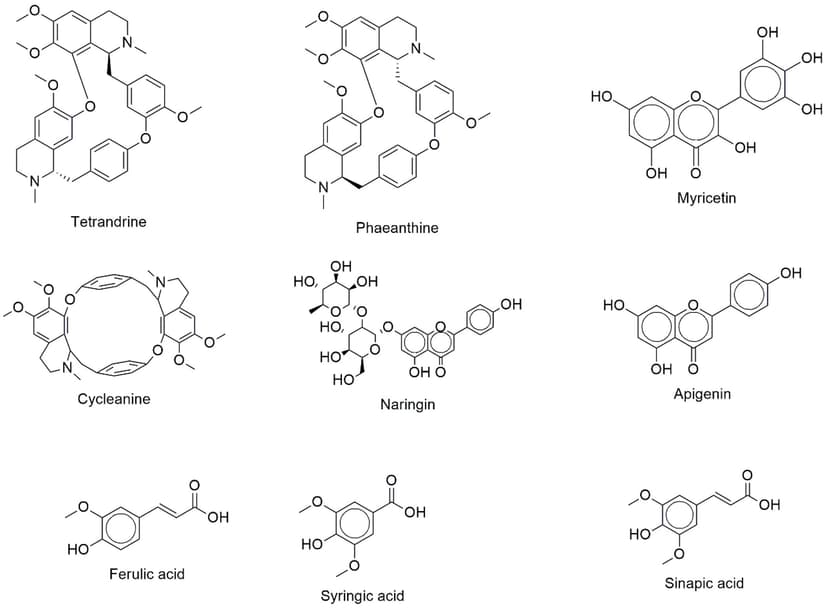
Figure 2.
Chemical structures of some characteristic phytochemicals of Cyclea spp.
BIOLOGICAL ACTIVITIES
Antiplasmodial and cytotoxic activity
A screen of 53 natural BBAs, including alkaloids from C. barbata and C. atjehensis, identified several compounds with selective antiplasmodial activity against chloroquine-sensitive and chloroquine-resistant Plasmodium falciparum, with cycleanine among the more selective agents and structure–activity relationships governed by stereochemistry and substitution patterns [42].
Anticancer activity
Tetrandrine isolated from C. peltata induced dose- and time-dependent cytotoxicity in breast (MDA-MB-231) and pancreatic (PANC-1) carcinoma cells through reactive oxygen species generation and caspase-mediated apoptosis [24]. Phaeanthine from the same species was selectively cytotoxic to cervical cancer (HeLa) cells, triggering mitochondria-mediated apoptosis with downregulation of Akt, an effect corroborated by molecular docking [20]. At the extract level, a methanolic extract of C. peltata leaves and its fractions were cytotoxic to MCF-7 breast cancer cells in the MTT assay; the n-hexane fraction was the most active (IC50 42 µg/mL) and induced apoptosis with loss of mitochondrial membrane potential, as shown by acridine orange/ethidium bromide and JC-1 staining [43]. Among C. wattii constituents, wattisine A showed significant cytotoxicity against HCT-8 and Bel-7402 lines [21], and (−)-curine induced G1 arrest and cell death in hepatocellular carcinoma cells independent of p53 status [25].
Anti-inflammatory and antioxidant activity
In C. peltata, the alkaloid-enriched fraction and purified tetrandrine suppressed lipopolysaccharide-induced iNOS, COX-2, and TNF-α expression in RAW 264.7 macrophages and displayed antioxidant activity, with tetrandrine being the most potent constituent [19]. Polyphenol-rich extracts of C. gracillima exhibited strong radical-scavenging, reducing, and metal-chelating capacity and inhibited low-densitylipoprotein oxidation and erythrocyte hemolysis [17].
Antidiabetic, diuretic and hepatoprotective activity
An aqueous root extract of C. peltata decreased fasting and postprandial glucose levels, increased insulin levels, reduced TNF-α levels, and increased skeletal muscle glycogen levels in type 2 diabetic rats [39]. Ethanolic leaf extracts produced significant diuresis comparable to that of furosemide [15]. Constituents isolated from C. barbata stems showed moderate hepatoprotective activity against acetaminophen-induced toxicity in HepG2 cells [23].
Antivenom and other activities
In preclinical assays, an aqueous root extract of C. peltata neutralized the lethal, enzymatic and hemolytic effects of Naja naja venom, supporting its ethnomedical antivenom use [26]. Consistent with the traditional application of the plant to hair and scalp care, C. peltata leaf material has also been developed into fermented herbal shampoo bases and used to green-synthesize silver nanoparticles [30,31]. Reported activities are listed in Table 2.
Table 2. Summary of biological activities reported for Cyclea species and their constituents.
PHARMACOLOGY OF ALKALOIDS
Tetrandrine, curine and their congeners are the signature alkaloids of Cyclea; the closely related fangchinoline and isotetrandrine occur in other Cissampelideae [44–46]. Although these compounds are shared with other Menispermaceae such as Stephania, the substantial body of compound-level pharmacology available for them provides mechanistic context for the genus [47]. Tetrandrine attenuated experimental silicosis by inhibiting canonical and noncanonical NLRP3 inflammasome activation in lung macrophages [28] and alleviated pulmonary fibrosis by restoring PINK1/Parkin-mediated mitophagy in alveolar epithelial cells [27]. In the central nervous system, tetrandrine mitigated tau aggregation and cognitive deficits by restoring lysosomal calcium homeostasis and autophagic flux [29]. A shared endolysosomal mechanism also underlies broad antiviral effects: BBAs, including tetrandrine, fangchinoline, isotetrandrine, berbamine and cepharanthine, inhibited flavivirus entry and replication [7] and impaired African swine fever virus internalization and replication by alkalinizing late endosomes and lysosomes [8].
TOXICOLOGY AND SAFETY
Toxicity of Cyclea extracts
Formal toxicological evaluation of Cyclea preparations is remarkably scarce given their long history of use as shown in Table 3.
Chellappan et al. reported no toxicity of C. peltata up to 2000 mg/kg root extract given orally in Wistar rats [48]. No subacute, subchronic, chronic, reproductive, genotoxicity or carcinogenicity study of any C. peltata extract was found, and the in vitro anticancer studies of its extracts and alkaloids did not include non-malignant control cells, so selectivity indices cannot be derived [20,24,43]. For C. barbata, conflicting results are reported. Angelina et al. reported the LD50 of C. barbata leaf extract in mice to exceed 30,000 mg/kg of body weight [49]. A recent evaluation of a leaf ethanol extract in Wistar rats found no mortality at 2000 mg/kg, 20% mortality among females at 5000 mg/kg and, in a 28-day study, a reduction in leukocyte counts from 400 mg/kg/day upward, yielding an acute NOAEL of 2000 mg/kg (GHS category 5) and a subacute NOAEL of 300 mg/kg/day [50]. In contrast, an earlier mouse study reported an LD50 of approximately 617 mg/kg for a leaf extract and classified it as moderately toxic [51]. The discrepancy most probably reflects differences in extraction solvent, plant material and dosing design, and underlines the need for chemically characterized test materials. No median lethal concentration (LC50) values have been reported for any Cyclea extract, and no toxicological data are available for C. gracillima, C. wattii, C. atjehensis or the remaining species of the genus.
Table 3. Toxicological data reported for Cyclea extracts and for tetrandrine, the characteristic alkaloid of the genus.
Adverse effects in traditional use
Classical Ayurvedic sources and modern ethnobotanical surveys describe Patha and cincau as safe at customary doses, and no case report of poisoning attributable to Cyclea was retrieved. This absence of reports should not be equated with proof of safety, because adverse-event surveillance for traditional preparations in South and Southeast Asia is minimal, and because Cyclea roots share their alkaloid profile with Stephania species that are used at comparable doses in Chinese medicine [52]. A related safety concern is botanical substitution: Menispermaceae drugs traded as ‘Fang Ji’ have repeatedly been adulterated with, or substituted by, Aristolochia fangchi, which contains nephrotoxic and carcinogenic aristolochic acids; in one survey, nine of ten commercial samples contained aristolochic acid I and lacked tetrandrine and fangchinoline [53]. Although that survey did not include Cyclea, the same risk applies to any tuberous-root Menispermaceae drug; therefore, authentication of Cyclea raw material should include screening for aristolochic acids.
Toxicology of the characteristic alkaloids
Most of what is known about the toxicity of Cyclea constituents comes from studies of tetrandrine, usually obtained from Stephania tetrandra or commercial sources. In female BALB/c mice, the intravenous LD50 of tetrandrine was 444.7 ± 35.8 mg/kg; single doses up to 340 mg/kg produced no biochemical or histological changes, and 14-day dosing at 30 or 90 mg/kg/day was without adverse effect, whereas 150 mg/kg/day caused transient hepatic, pulmonary and renal toxicity that resolved after withdrawal [54]. The lung and liver are the principal target organs. In CD-1 mice, tetrandrine produced dose-dependent pulmonary injury that was linked to cytochrome P450-mediated metabolic activation [55], and CYP3A5 was subsequently shown to bioactivate tetrandrine to a reactive quinone methide intermediate that depletes glutathione, generates reactive oxygen species and triggers apoptosis in human lung cells [56]. In rat hepatocytes, cytochrome P450-derived reactive oxygen species, particularly those generated by CYP2E1, mediate tetrandrine-induced mitochondrial dysfunction and ATP depletion [57], and the C-12 methoxy group has been identified as a structural determinant of hepatotoxicity [58]. Tetrandrine is also cytotoxic to renal tubular epithelial cells, although in a direct comparison its nephrotoxicity was markedly less than that of aristolochic acid [59]. In genotoxicity assays, tetrandrine increased sister-chromatid exchange in V79 cells only in the presence of metabolic activation and in mouse spleen cells at 100–200 mg/kg, but did not induce micronuclei in vitro or in vivo, leading to its classification as a weak, indirect-acting genotoxicant [60]. Comparable toxicological characterization of fangchinoline, isotetrandrine, phaeanthine, curine, cycleanine and the wattisines is lacking; their potent cytotoxicity toward cancer cell lines [20], [21], [24], [25] implies that they should not be assumed to be innocuous.
Clinical safety data and safety margins
Clinical exposure data exist only for tetrandrine. In silicosis patients receiving tetrandrine tablets at 60 mg three times daily in cyclic courses, adverse events were mild and comprised facial pigmentation (28%), transient pruritus (9%), mild liver-function abnormalities (9%), transient diarrhea (6%) and loss of appetite (2%) [61]; earlier clinical experience likewise reported good tolerability, although the high tablet burden and reports of gastrointestinal, hepatic and renal effects remain concerns [58]. No clinical pharmacokinetic or safety study of a Cyclea extract has been published, and because the tetrandrine content of C. peltata roots varies with source and extraction method [24,45], the human exposure resulting from traditional doses of Patha cannot presently be estimated. A formal safety margin for any Cyclea preparation therefore cannot be calculated, which is the single most important toxicological gap identified by this review.
CRITICAL APPRAISAL OF THE EVIDENCE
The included studies were heterogeneous in design and generally preclinical. In vitro and phytochemical reports were typically well characterized analytically, whereas in vivo studies varied in their reporting of randomization, blinding, and dose–response [39,45,50,51], limiting formal quality grading. Positive controls were used inconsistently across bioassays [39], [43], and several compound-level pharmacology reports did not source the test alkaloid from the Cyclea genus [8,28,54-60]; thus, their findings are best regarded as mechanistic support rather than direct evidence of genus activity. Research was concentrated in a small number of laboratories and countries, raising the possibility of publication and geographic bias.
PROSPECTS AND FUTURE DIRECTIONS
This review provides the first genus-level synthesis of the phytochemistry, biological activities, and toxicology of Cyclea, and three principal findings emerge. First, the genus is chemically coherent: bisbenzylisoquinoline alkaloids (BBAs) of the tetrandrine, curine and cycleanine types recur in every species examined, consistent with its placement in the tribe Cissampelideae alongside Stephania and Cissampelos [9,21]. Second, the pharmacological activities documented for extracts and isolated constituents map closely onto the indications for which C. peltata and C. barbata are used in Ayurveda and in South-East Asian folk medicine, lending preliminary experimental support to their traditional applications [15,19,39]. Third, and in marked contrast, toxicological, pharmacokinetic and clinical evidence is disproportionately thin relative to the long history of human use, such that a safety margin cannot presently be calculated for any Cyclea preparation.
The dominance of tetrandrine in C. peltata [19,24], the co-occurrence of its diastereomer phaeanthine [20], the curine-type wattisines A and B and (−)-curine in C. wattii [21], and cycleanine, cycleatjehine and cycleatjehenine in C. barbata and C. atjehensis [42] together indicate that BBA biosynthesis is a conserved feature of the genus, and that the diversity within it arises chiefly from differences in the stereochemistry of the two benzylisoquinoline halves and the pattern of ether bridging and O-methylation. This is pharmacologically important, because stereochemistry and substitution govern both antiplasmodial selectivity [42] and, as discussed below, hepatotoxicity [58]; the total synthesis of tetrandrine and isotetrandrine has clarified the structural basis of this diversity [40]. At the same time, the genus is not chemically monotonous. The azafluoranthene alkaloids and phytoecdysone of C. barbata stems were the first of their structural class reported from Cyclea [23], the leaves of the same species yield a gel-forming low-methoxyl pectin [16], and C. gracillima is distinguished by a phenolic acid- and flavonoid-rich profile rather than by alkaloids [17]. Given that fewer than a quarter of the recognized species have been chemically examined, and that even within C. peltata the tetrandrine content varies substantially between accessions grown under common-garden conditions [33], the unexamined species and chemotypes represent a considerable and largely untouched reservoir of structural novelty.
The anticancer data are the most extensively replicated in the genus and converge on a consistent picture. For instance, tetrandrine from C. peltata induced reactive oxygen species-dependent, caspase-mediated apoptosis in breast and pancreatic carcinoma cells [24], phaeanthine triggered mitochondria-mediated apoptosis with Akt downregulation in cervical cancer cells [20], wattisine A was cytotoxic to colorectal and hepatocellular lines [21], and (−)-curine arrested hepatocellular carcinoma cells in G1 independently of p53 status [25]. The demonstration of a p53-independent route to cell death is notable, since loss of p53 function is common in human tumors. Nevertheless, the translational value of these observations is constrained by the absence of non-malignant comparator cells in every study conducted with material of Cyclea origin, so that selectivity indices cannot be derived, and by the lack of any in vivo antitumor study using genus-derived compounds. The anti-inflammatory findings are better anchored: bioassay-guided fractionation identified tetrandrine as the principal constituent suppressing iNOS, COX-2 and TNF-α in macrophages [19], an activity that is mechanistically consistent with the inhibition of canonical and non-canonical NLRP3 inflammasome activation demonstrated for tetrandrine in models of silicosis [28]. This provides a rare instance in which genus-level bioassay data and compound-level mechanism align. By contrast, the antidiabetic [39], diuretic [15], antivenom [26], and hepatoprotective activities [23] each rest on a single study, and none has been independently replicated or attributed to a defined constituent.
A recurring theme of the compound-level literature is the convergence of BBAs on the endolysosomal–autophagy axis. Tetrandrine restores PINK1/Parkin-mediated mitophagy in fibrotic lung epithelium [27], normalizes lysosomal calcium homeostasis and autophagic flux in tauopathy models [29], and, together with fangchinoline, isotetrandrine and cepharanthine, blocks flavivirus and African swine fever virus entry by compromising late endosomal and lysosomal function [7], [8]. A single lysosomotropic mechanism could plausibly account for much of the pleiotropy of these alkaloids. However, this work was generated using tetrandrine sourced from Stephania or commercial suppliers, not from Cyclea. The mechanistic hypothesis it offers for the genus is therefore attractive but untested, and whether traditional Cyclea preparations deliver a tetrandrine exposure sufficient to engage these targets in humans is unknown.
The toxicological picture is internally consistent for tetrandrine and fragmentary for the plant. For C. peltata, an oral LD50 above 2500 mg/kg for an alkaloid-enriched root extract [45] and LD50 above 2000 mg/kg for root ethanol extract [48] are concordant evidence of low acute oral toxicity. Angelina et al. reported LD50 above 30000 mg/kg for C. barbata leaf extract in mice [49]. For C. barbata, the divergence between an acute NOAEL of 2000 mg/kg with a subacute NOAEL of 300 mg/kg/day in rats [50] and an LD50 of approximately 617 mg/kg in mice [51] most probably reflects differences in solvent, plant material and dosing design rather than a true species difference. These findings indicate why toxicological conclusions cannot be drawn from chemically uncharacterized extracts. The compound-level data indicate that tetrandrine is a bioactivation-dependent toxicant: CYP3A5 converts it to a reactive quinone methide that depletes glutathione and injures lung cells [55], [56], CYP2E1-derived reactive oxygen species mediate hepatocyte mitochondrial dysfunction [57], and the C-12 methoxy group is a structural determinant of hepatotoxicity [58]. Its genotoxicity is weak and indirect [60], its nephrotoxicity is markedly lower than that of aristolochic acid [59], and in silicosis patients receiving 180 mg/day, the adverse events were mild [61]. Two implications follow. First, because the target organs are the lung and liver and the mechanism is metabolic, inter-individual variation in CYP3A5 and CYP2E1 expression, and co-administration of enzyme inducers, may modify the risk of Cyclea preparations in ways that acute rodent studies would not reveal. Second, the comparative toxicology of phaeanthine, curine, cycleanine, fangchinoline and the wattisines is entirely lacking, and their potent cytotoxicity toward cancer cells argues against assuming that they are innocuous.
A distinct safety issue is botanical identity. Tuberous-root Menispermaceae drugs traded as 'Fang Ji' have repeatedly been adulterated with Aristolochia fangchi, and in one survey nine of ten commercial samples contained aristolochic acid I while lacking tetrandrine and fangchinoline [53]. Although Cyclea was not included in that survey, Patha shares the same morphology and market channels, and the unresolved taxonomy of the genus [10] compounds the risk of misidentification. The absence of poisoning reports in ethnobotanical literature should not be read as evidence of safety, since adverse-event surveillance for traditional preparations in the region is minimal.
Several limitations temper these conclusions. The primary literature is concentrated in a small number of laboratories in India, China, Taiwan, and Indonesia, raising the possibility of geographic and publication bias, and a proportion of it appears in regional journals. Study designs are heterogeneous; positive controls and dose–response designs are used inconsistently [16,27,39,43], and the reporting of randomization and blinding in animal studies is often incomplete [39], [45], [50], [51], which precluded formal quality grading. Much of the most detailed mechanistic pharmacology and toxicology concerns tetrandrine obtained from Stephania or commercial sources and is applicable to Cyclea only by inference [8,28,29,54–60].
The gaps identified here translate into a clear research agenda. The great majority of species, and the divergent chemotypes of C. peltata, should be profiled phytochemically using mass spectrometry-based dereplication so that new dimeric alkaloids and non-alkaloidal constituents can be discovered without repeated re-isolation of tetrandrine. Botanically, every pharmacological or toxicological study should begin with authenticated material, ideally combining DNA-based identification with chromatographic fingerprinting of the marker alkaloids and mandatory screening for aristolochic acids; chemotype-aware standardization of tetrandrine content would make results comparable across laboratories. Pharmacologically, priority should be given to reproducing the single-study activities with characterized extracts, positive controls and full dose–response designs; to including non-malignant cells in every cytotoxicity study so that selectivity can be quantified; to testing whether Cyclea-derived tetrandrine and phaeanthine engage the NLRP3, mitophagy and endolysosomal targets identified with commercial material; and to following up neglected leads such as the antiplasmodial selectivity of cycleanine and the broad antiviral activity of the BBA class. Toxicologically, the most pressing needs are guideline-compliant subacute and subchronic studies, genotoxicity and reproductive toxicity assessment, characterization of lung and liver as target organs, evaluation of cytochrome P450-mediated bioactivation and drug-interaction potential, and comparative toxicity data for the alkaloids other than tetrandrine. Pharmacokinetic studies quantifying the tetrandrine exposure produced by traditional doses of Patha and cincau are the essential bridge between the preclinical data and any estimate of a human safety margin. Beyond medicine, the gel-forming pectin of C. barbata, the cosmetic applications of C. peltata and its use in nanoparticle synthesis deserve development in parallel, and cultivation of the medicinally important species would both secure a consistent supply and support the resolution of the genus' taxonomy.
CONCLUSIONS
The genus Cyclea is an ethnobotanically important but scientifically under-explored member of the Menispermaceae whose species are chemically unified by bisbenzylisoquinoline alkaloids of the tetrandrine, curine and cycleanine types and further diversified by azafluoranthene alkaloids, phytoecdysones, phenolic acids, flavonoids and a gel-forming pectin. Extracts and isolated constituents of C. peltata, C. barbata, C. gracillima, C. wattii and C. atjehensis display anticancer, anti-inflammatory, antioxidant, antiplasmodial, antidiabetic, diuretic, hepatoprotective and antivenom activities that broadly corroborate the traditional uses of Patha and cincau hijau, and compound-level studies of tetrandrine point to a shared endolysosomal–autophagy mechanism that may underlie the pleiotropy of the genus' signature alkaloids. Yet the evidence remains preclinical, methodologically heterogeneous and concentrated on two species, and much of the mechanistic detail has been borrowed from alkaloids sourced outside the genus. Most importantly, formal toxicological evaluation is confined to a handful of acute studies with partly conflicting results; tetrandrine is a cytochrome P450-activated hepatic and pulmonary toxicant, no clinical or pharmacokinetic study of any Cyclea preparation has been reported, and the risk of substitution by aristolochic acid-containing Aristolochia species has not been addressed for this genus. A safety margin for any Cyclea preparation therefore cannot currently be calculated. Realizing the therapeutic promise of the genus will depend on authenticated and chemically standardized plant material, exploration of its unexamined species, replication of single-study activities under rigorous designs, guideline-compliant toxicology and pharmacokinetic data that link traditional doses to human exposure. Until these foundations are laid, Cyclea should be regarded as a promising source of lead compounds rather than as a validated medicine.
ACKNOWLEDGEMENTS
None.
AUTHOR CONTRIBUTIONS
ARA: Conceptualization, methodology, software, validation, formal analysis, investigation, data curation, visualization, supervision, project administration, writing-original draft, and writing-review and editing. FTZ: Investigation, data curation, writing-review and editing. IH: Investigation, data curation, writing-review and editing. All authors read and approved the final manuscript.
CONFLICTS OF INTEREST
There is no conflict of interest among the authors.
References
[1]
Newman DJ, Cragg GM. Natural Products as Sources of New Drugs over the Nearly Four Decades from 01/1981 to 09/2019. J Nat Prod 2020;83:770–803.
[2]
Hao D, Xu L, et al. Mining Therapeutic Efficacy from Treasure Chest of Biodiversity and Chemodiversity: Pharmacophylogeny of Ranunculales Medicinal Plants. Chin J Integr Med 2022;28:1111–26.
[3]
Weber C, Opatz T. Chapter One - Bisbenzylisoquinoline Alkaloids. In: Knölker H-J, editor. The Alkaloids: Chemistry and Biology, vol. 81, Academic Press; 2019, p. 1–114.
[4]
Bhagya N, Chandrashekar KR. Tetrandrine – A molecule of wide bioactivity. Phytochemistry 2016;125:5–13.
[5]
Zhang Y, Qi D, et al. History of uses, phytochemistry, pharmacological activities, quality control and toxicity of the root of Stephania tetrandra S. Moore: A review. Journal of Ethnopharmacology 2020;260:112995.
[6]
Wang M, Zhang XM, et al. Alkaloids in genus stephania (Menispermaceae): A comprehensive review of its ethnopharmacology, phytochemistry, pharmacology and toxicology. Journal of Ethnopharmacology 2022;293:115248.
[7]
Huang L, Liu L, et al. Bis-benzylisoquinoline alkaloids inhibit flavivirus entry and replication by compromising endolysosomal trafficking and autophagy. Virologica Sinica 2024;39:892–908.
[8]
Zhu J, Chen H, et al. Bis-benzylisoquinoline alkaloids inhibit African swine fever virus internalization and replication by impairing late endosomal/lysosomal function. J Virol 2024;98:e00327-24.
[9]
Ortiz RDC, Wang W, et al. Phylogeny and a revised tribal classification of Menispermaceae (moonseed family) based on molecular and morphological data. TAXON 2016;65:1288–312.
[10]
Lian L, Zhang Q, et al.. The endocarp evolution of Cissampelideae (Menispermaceae): integrating extant and fossil species. Annals of Botany 2026;137:2015–24.
[11]
Forman LL. The Menispermaceae of Malaysia: III. Cyclea Arnott ex Wight. Kew Bulletin 1960;14:68.
[12]
POWO. Plants of the World Online. Facilitated by the Royal Botanic Gardens, Kew 2026.
[13]
Semwal DK, Semwal RB, et al. From arrow poison to herbal medicine – The ethnobotanical, phytochemical and pharmacological significance of Cissampelos (Menispermaceae). Journal of Ethnopharmacology 2014;155:1011–28.
[14]
Singh S, K N. Review on Cissampelos Pareira and Cyclea Peltata (Patha Dwaya) - Phyto-Pharmacological Perspectives. IJAM 2013;4. https://doi.org/10.47552/ijam.v4i4.288.
[15]
Hullatti K, Gopikrishna U, et al. Phytochemical investigation and diuretic activity of Cyclea peltata leaf extracts. J Adv Pharm Technol Res 2011;2:241.
[16]
Yuliarti O, Chong SY, et al. Physicochemical properties of pectin from green jelly leaf ( Cyclea barbata Miers). International Journal of Biological Macromolecules 2017;103:1146–54.
[17]
Lin JT, Liu SC, et al. Composition of phenolic compounds and antioxidant attributes of Cyclea gracillima Diels extracts. Journal of Food and Drug Analysis 2018;26:193–200.
[18]
Gao L, Wei N, et al. Ethnomedicine study on traditional medicinal plants in the Wuliang Mountains of Jingdong, Yunnan, China. J Ethnobiology Ethnomedicine 2019;15:41.
[19]
Shine VJ, Anuja GI, et al. Bioassay guided fractionation of Cyclea peltata using in vitro RAW 264.7 cell culture, antioxidant assays and isolation of bioactive compound tetrandrine. Journal of Ayurveda and Integrative Medicine 2020;11:281–6.
[20]
Valsan A, Meenu MT, et al. Exploration of Phaeanthine: A Bisbenzylisoquinoline Alkaloid Induces Anticancer Effect in Cervical Cancer Cells Involving Mitochondria-Mediated Apoptosis. ACS Omega 2023;8:14799–813.
[21]
Wang JZ, Liu XY, et al. Two New Curine-Type Bisbenzylisoquinoline Alkaloids from the Roots of Cyclea wattii with Cytotoxic Activities. Chem Pharm Bull 2010;58:986–8.
[22]
Ahmad I, Elya B, et al. Design of ionic liquid-based microwave-assisted extraction of flavonoids from Cyclea barbata Miers. and its lipoxygenase inhibitory activity. J App Pharm Sci 2020;10:1–7.
[23]
Wang XJ, Zhang Q, et al. Two azafluoranthene alkaloids and a phytoecdysone from the stems of Cyclea barbata. Journal of Asian Natural Products Research 2019;21:217–26.
[24]
Bhagya N, Chandrashekar KR, et al. Tetrandrine isolated from Cyclea peltata induces cytotoxicity and apoptosis through ROS and caspase pathways in breast and pancreatic cancer cells. In Vitro CellDevBiol-Animal 2019;55:331–40.
[25]
Gong S, Xu D, et al. (−)-Curine induces cell cycle arrest and cell death in hepatocellular carcinoma cells in a p53-independent way. Biomedicine & Pharmacotherapy 2017;89:894–901.
[26]
Sivaraman T, Sreedevi N, et al. Antitoxin activity of aqueous extract of Cyclea peltata root against Naja naja venom. Indian J Pharmacol 2017;49:275.
[27]
Chu L, Zhuo J, et al. Tetrandrine alleviates pulmonary fibrosis by inhibiting alveolar epithelial cell senescence through PINK1/Parkin-mediated mitophagy. European Journal of Pharmacology 2024;969:176459.
[28]
Song M, Wang J, et al. Tetrandrine alleviates silicosis by inhibiting canonical and non-canonical NLRP3 inflammasome activation in lung macrophages. Acta Pharmacol Sin 2022;43:1274–84.
[29]
Tong BCK, Huang AS, et al. Tetrandrine ameliorates cognitive deficits and mitigates tau aggregation in cell and animal models of tauopathies. J Biomed Sci 2022;29:85.
[30]
Cheni Cheri D, Kizhakke Veettil AS, et al. Development of EPS‐rich herbal shampoo base fermented using Cyclea peltata leaf powder and Lactobacillus plantarum. J of Cosmetic Dermatology 2022;21:4999–5009.
[31]
Saripalla DD, Khokhani ND, et al. Organoleptic and physicochemical properties of natural‐based herbal shampoo formulations with Cyclea peltata as a key ingredient. J of Cosmetic Dermatology 2022;21:1666–74.
[32]
Yang SZ, Chen PH. Endocarps of menispermaceous plants in Taiwan. Bot Stud 2016;57:14.
[33]
Meena AJ, Christopher C, et al. Chemotypic variation of tetrandrine in Cyclea peltata accessions grown under common-garden conditions. Biochemical Systematics and Ecology 2026;129:105334.
[34]
Mikaelchung. Cyclea barbata Miers (photograph). iNaturalist; 2026.
[35]
Samant S. Cyclea peltata (Lam.) Hook.f. & Thomson (photograph). iNaturalist; 2019.
[36]
Veach R. Cyclea peltata (Lam.) Hook.f. & Thomson (photograph). iNaturalist; 2013.
[37]
Zhang H, Zhang XY, et al. Stamen and pollen development in Menispermaceae with contrasting androecium structure. Plant Systematics and Evolution 2022;308.
[38]
Forman LL. A Synopsis of Thai Menispermaceae. Kew Bulletin 1988;43:369.
[39]
Kirana H, Srinivasan BP. Effect of Cyclea peltata Lam. roots aqueous extract on glucose levels, lipid profile, insulin, TNF-alpha and skeletal muscle glycogen in type 2 diabetic rats. Indian J Exp Biol 2010;48:499–502.
[40]
Schütz R, Meixner M, et al. A modular approach to the bisbenzylisoquinoline alkaloids tetrandrine and isotetrandrine. Org Biomol Chem 2020;18:3047–68.
[41]
Bhagya N, Chandrashekar KR. Optimization of column chromatography technique for the isolation of tetrandrine from Cyclea peltata and LC-ESI-MS based quantification and validation of the method. Natural Product Research 2019;33:2873–7.
[42]
Angerhofer CK, Guinaudeau H, et al. Antiplasmodial and Cytotoxic Activity of Natural Bisbenzylisoquinoline Alkaloids. J Nat Prod 1999;62:59–66.
[43]
Roshni S, Geevarghese S, et al. Evaluation of cytotoxic potential of leaves of Cyclea peltata in MCF-7 cell lines. J Phytopharmacol 2025;14:78–86.
[44]
Nekrakaleya B, Ramaiah CK. Mass Spectrometry-based Alkaloid Profiling of Cyclea peltata Roots andEvaluation of In vitro Cytotoxic Activity. CBC 2023;19:e011222211479.
[45]
Shine VJ, Latha PG, et al. Ameliorative effect of alkaloid extract of Cyclea peltata (Poir.) Hook. f. & Thoms. roots (ACP) on APAP/CCl4 induced liver toxicity in Wistar rats and in vitro free radical scavenging property. Asian Pacific Journal of Tropical Biomedicine 2014;4:143–51.
[46]
Liu T, Liu X, et al. Tetrandrine, a Chinese plant-derived alkaloid, is a potential candidate for cancer chemotherapy. Oncotarget 2016;7:40800–15. https://doi.org/10.18632/oncotarget.8315.
[47]
Sun YF, Wink M. Tetrandrine and fangchinoline, bisbenzylisoquinoline alkaloids from Stephania tetrandra can reverse multidrug resistance by inhibiting P-glycoprotein activity in multidrug resistant human cancer cells. Phytomedicine 2014;21:1110–9. https://doi.org/10.1016/j.phymed.2014.04.029.
[48]
Chellappan DR, Joseph J, et al. Pharmacognostical, antioxidant and antiulcer screening of Cyclea peltata roots. Rev Bras Farmacogn 2011;21:1096–103.
[49]
Angelina M, Hartati S, et al. PENENTUAN LD50 DAUN CINCO (Cyclea barbata Miers.) PADA MENCIT. MSS 2010;12.
[50]
Noviyanti N, Purnama JN, et al. Ethanol Extract of Cyclea barbata Miers Exhibited A Favorable Safety Profile at Moderate Doses in Wistar Rats. Indones Biomed J 2026;18:365–78.
[51]
Poernomo H, Ma’aruf T, et al. ID50 acute toxicity test of green grass jelly (Cyclea barbata miers) leaf extract against mice (mus musculus l.): uji toksisitas akut ID50 ekstrak daun cincau hijau (cyclea barbata miers) terhadap mencit (mus musculus l.). Interdental 2023;19:67–73.
[52]
Jiang Y, Liu M, et al. A critical review: traditional uses, phytochemistry, pharmacology and toxicology of Stephania tetrandra S. Moore (Fen Fang Ji). Phytochem Rev 2020;19:449–89.
[53]
Koh HL, Wang H, et al. Detection of aristolochic acid I, tetrandrine and fangchinoline in medicinal plants by high performance liquid chromatography and liquid chromatography/mass spectrometry. Journal of Pharmaceutical and Biomedical Analysis 2006;40:653–61.
[54]
Shi J, Li S, et al. Acute and sub-chronic toxicity of tetrandrine in intravenously exposed female BALB/c mice. Chin J Integr Med 2016;22:925–31.
[55]
Jin H, Li L, et al. Pulmonary Toxicity and Metabolic Activation of Tetrandrine in CD-1 Mice. Chem Res Toxicol 2011;24:2142–52.
[56]
Tian Y, Shen S, et al. CYP3A5 mediates bioactivation and cytotoxicity of tetrandrine. Arch Toxicol 2016;90:1737–48.
[57]
Qi X, Miao L, et al. ROS generated by CYP450, especially CYP2E1, mediate mitochondrial dysfunction induced by tetrandrine in rat hepatocytes. Acta Pharmacol Sin 2013;34:1229–36.
[58]
Mo L, Zhang F, et al. Progress on structural modification of Tetrandrine with wide range of pharmacological activities. Front Pharmacol 2022;13:978600.
[59]
Yuan SY, Yang CR, et al. Comparative Nephrotoxicity of Aristolochic Acid and Tetrandrine In Vitro and In Vivo. Int J Toxicol 2011;30:35–46.
[60]
Xing SG, Shi XC, et al. Effect of tetrandrine on micronucleus formation and sister-chromatid exchange in both in vitro and in vivo assays. Mutation Research/Genetic Toxicology 1989;224:5–10.
[61]
Zhou S, Shi J, et al. Tetrandrine slows disease progression on high-resolution computed tomography and lung function decline in artificial stone-associated silicosis: a retrospective cohort study. BMC Pulm Med 2025;25:343.
Share and Cite
Harvard Style
Alif, A. and Hossain, I. and Zohora, F., 2026, 'Phytochemistry, biological activities, and toxicological insights into the genus Cyclea (Menispermaceae): A comprehensive review', Toxicant Research, vol. 2, no. 3, pp. 54-68.
ACS Style
Alif, A.; Hossain, I.; Zohora, F. Phytochemistry, biological activities, and toxicological insights into the genus Cyclea (Menispermaceae): A comprehensive review. Toxicant Research 2026, 2(3), 54-68. https://doi.org/10.66439/tr.2026.07
AMA Style
Alif, A.; Hossain, I.; Zohora, F. Phytochemistry, biological activities, and toxicological insights into the genus Cyclea (Menispermaceae): A comprehensive review. Toxicant Research. 2026;2(3):54-68. https://doi.org/10.66439/tr.2026.07
Chicago/Turabian Style
Alif, Al-Ashiqur Rahman ; Hossain, Imran ; Zohora, Fatema-Tuz-. 2026. "Phytochemistry, biological activities, and toxicological insights into the genus Cyclea (Menispermaceae): A comprehensive review" Toxicant Research 2, no. 3: 54-68. https://doi.org/10.66439/tr.2026.07
APA Style
Alif, A.; Hossain, I.; Zohora, F. (2026). Phytochemistry, biological activities, and toxicological insights into the genus Cyclea (Menispermaceae): A comprehensive review. Toxicant Research, 2(3), 54-68. https://doi.org/10.66439/tr.2026.07
Article Metrics
Article Access Statistics
Article Info
Academic Editor
Md Jamal Uddin, PhD
Received
04 August 2026
Accepted
16 September 2026
Published
24 September 2026
Article DOI
10.66439/tr.2026.07Corresponding Author
Al-Ashiqur Rahman Alif
,Department of Pharmaceutical Chemistry, Faculty of Pharmacy, University of Dhaka, Dhaka, Bangladesh
School of Pharmacy, BRAC University, Dhaka 1212, Bangladesh
;Cite this article
Alif A, Hossain I, Zohora F. Phytochemistry, biological activities, and toxicological insights into the genus Cyclea (Menispermaceae): A comprehensive review. Toxicant Res. 2026; 2(3), 54-68. 2026; 2(3): 54-68