Loading...
Bacillus subtilis mitigates lead-induced toxicity through regulating physiological and biochemical attributes in Brassica alba L.
Mst. Nishat Aungum†
,Mostofa Asif Anjum†
,B. S. M. Anowar Amzad
,Hadiuzzaman -
,Md. Khalekuzzaman
,Md. Asadul Islam
,Biswanath Sikdar
,Uzzal Kumar Acharjee
,Md. Firose Hossain
,Rashed Zaman
Abstract
Lead (Pb) toxicity is one of the largest environmental crises in Bangladesh, significantly impairing plant growth and productivity. Therefore, eco-friendly and cost-effective Pb-toxicity mitigation strategies are highly desirable. The study aimed to explore the potential of Bacillus subtilis in mitigating Pb-toxicity along with plant improvement in Brassica alba L. In this study, Pb-toxicity significantly inhibited physiological and biochemical traits in B. alba, while the supplantation of B. alba significantly reverted these key physiological and growth attributes. The application of B. subtilis increased plant height by about 26%, shoot biomass by about 18%, root length by about 69%, chlorophyll a by 28.3%, chlorophyll b by 72.2%, total chlorophyll to near-control levels, carotenoids to control-comparable values, and total soluble protein by about 44%.These findings suggest that B. alba is able to actively respond to Pb-stress and that plays a significant role in enhancing plant growth and Pb-tolerance. This study further indicates that B. subtilis could be a sustainable frontier for ameliorating metal toxicity in crops. These findings together open a paradigm of eco-friendly and cost-effective strategies toward sustainable crop production and global food security.
INTRODUCTION
Lead (Pb) toxicity is a critical issue for soil, plants, and the environment. Nowadays, Pb toxicity is potentially increasing due to poor management and the presence of industrial chemicals, lead sources from batteries of electric vehicles (EVs), and the addition of metal-containing fertilizers to soils. These practices significantly effect on crops growth and productivity. Therefore, Pb-toxicity mitigating sustainable strategies are crucial for managing Pb-toxicity in plants, soil, and environments [1, 5]. The idea of growing plants without soil isn't new. However, it was in the late 20th century that hydroponics really took off commercially, especially among greenhouse vegetable growers in Europe and North America [2]. Well plant crowing system helps to control light, nutrients, water, and oxygen. This affordable approach allows for growing food in areas where water or land is limited [3]. Hydroponics consumes significantly less water and nutrients than conventional field gardening. This system makes gaining popularity even in damaged farmland and water scarcity areas [4].
Plants’ growth and productivity are significantly hampered due to several metal toxicities, including Pb [5]. Pb-toxicity inhibits photosynthesis, seed germination, and the formation of total biomass [6]. It disrupts fundamental cellular functions like the cell cycle and programmed cell death (apoptosis), and it continues to enter the environment through contaminated runoff, contaminated soil, and industrial waste [5], [7]. By 2030, diseases associated with contaminated soil must be significantly reduced, according to the 2015 Sustainable Development Goals (SDGs) of the United Nations. This emphasizes how urgently improved methods of heavy metal cleanup are needed. Conventional techniques like chemical precipitation, ion exchange, and reverse osmosis are sometimes costly and ineffective against heavy metal complexes that are difficult to remove. Because of this, a lot of researchers are using more cutting-edge biological methods like bioremediation [8].
Eco-friendly and cost-effective strategies can mitigate Pb-toxicity stress in plants; supplementation of B. subtilis could be a potential solution for heavy metal toxicity [10]. The B. subtilis is a gram-positive, spore-forming rhizobacterium, well-known for its capacity to promote plant growth (PGP). This effective microbe enhances nutrient intake, enhances the accumulation of plant growth regulators, and acts as an aid for activating the plant's defense mechanisms [11]. B. subtilis mitigates heavy metals through alteration of a series of natural processes, including biosorption, bioaccumulation, and bioprecipitation, making it especially helpful. These procedures aid in the efficient detoxification of polluted surroundings in plants [12]. On the other hand, bioaccumulation is an active process whereby live, metabolically active cells use energy to absorb the metals [5]. Furthermore, B. subtilis creates extracellular polymeric substances (EPS), a type of sticky slime that can bind positively charged metal ions, providing it with an additional bioremediation support [8]. Combining these characteristics of B. subtilis opens an excellent option for improving plant growth and strengthening plants' tolerance to heavy metal stress.
Brassica alba belongs to the Brassicaceae family and is well-known for its nutritional and therapeutic qualities, including antioxidant activity and cancer chemoprevention [13]. An annual herb grown all over the world, B. alba provides a high concentration of vitamins C and E, carotenoids, and sulfur-organic compounds that have anti-mutagenic and immune-stimulating properties [14]. Plant exposure to Pb declines chlorophyll content, protein synthesis, and total biomass, which can seriously affect its growth and physiological function [6]. This study focuses on the potential of B. subtilis in reducing lead-induced stress in B. alba. The B. subtilis regulars’ vegetative growth parameters, Pb-accumulation in plant tissues, and biochemical markers like protein content, carotenoids, and chlorophyll. Thus, the primary objectives of this study were to determine how B. subtilis impacts B. alba's vegetative growth under Pb stress. Second, to quantify the amount of Pb that builds up in plant tissues both with and without the bacterium. Third, to examine important markers of plant health like protein, carotenoid, and chlorophyll levels. The findings could aid in improving the utilization of beneficial bacteria like PGPR in soilless agriculture and strengthening cropping systems for areas contaminated with heavy metals.
MATERIALS AND METHODS
Experimental design and setup
A deep-water culture (DWC) hydroponic system was used to carry out the investigation under regulated indoor circumstances. This system was selected due to its ease of microbial inoculation and aptitude for replicating metal-contaminated aquatic environments. Four treatment groups were used in the fully randomized experiment: (i) Control (no treatment), (ii) B. subtilis only, (iii) Pb(NO₃)₂ only, and (iv) B. subtilis + Pb(NO₃)₂. Every treatment was repeated three times.
The seeds of Brassica alba were first surface-sterilized for five minutes using a 1% sodium hypochlorite solution, and then they were rinsed with sterile distilled water. In cocopeat, the seeds grew at room temperature (25 ± 2°C) with a natural photoperiod. After 7 days, uniform seedlings were transferred into the hydroponic setup containing Hoagland’s nutrient solution and allowed to acclimate for 20 days before the treatment phase commenced. Figure 1 provides the overall research sequence.
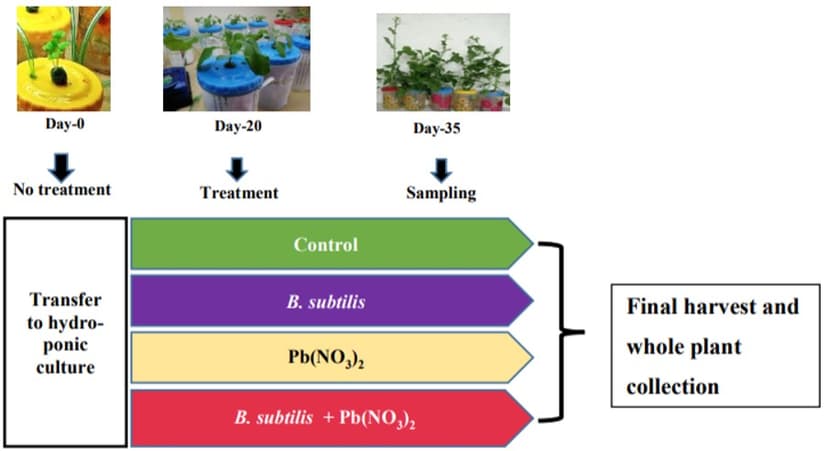
Figure 1. Experimental overview of plant (B. alba L. growing in a hydroponic system, Pb treatment, and plant harvesting after completing treatment. Abbreviation, Pb (NO3)2, lead nitrate; B. subtilis, B. subtilis.
Preparation of bacterial inoculum
The University of Dhaka's Department of Microbiology provided a pure culture of Bacillus subtilis. After being revitalized in nutrient broth, the strain was cultured for 24 hours at 30°C while being shaken at 120 rpm. Prior to application, the optical density (OD600) was set to 1.0 (~10¹ CFU/mL). B. subtilis was directly added to the hydroponic solution to a final concentration of 10◦ CFU/mL for treatment groups that needed bacterial inoculation. The inoculum was reapplied every 5 days to maintain effective colonization.
Application of Pb-treatment
Heavy metal stress was simulated using lead nitrate [Pb(NO₃)₂] (analytical grade, Merck). Based on earlier toxicity screening investigations for Brassica spp., a 100-ppm stock solution was made in deionized water and supplied to the hydroponic reservoir of the relevant treatment groups to maintain a final concentration of 50 ppm. in a hydroponic environment [5].
Growth and morphological parameters
After 15 days of treatment exposure, a suite of morphological parameters was assessed. These included: Plant height (cm): measured from the root–shoot junction to the apex, fresh biomass (g): measured separately for shoot and root systems, root and shoot length (cm), leaf number per plant, branch number, leaf length, and width (cm), individual leaf weight (g): obtained using an analytical balance and each measurement was averaged over five randomly selected plants per treatment replicate.
Biochemical analysis
To assess physiological responses, the following biochemical markers were quantified from fresh leaf tissue:
Chlorophyll and carotenoids
Pigments were extracted using 80% acetone, and absorbance was measured spectrophotometrically at 663 nm, 645 nm, and 470 nm for chlorophyll a, chlorophyll b, and carotenoids, respectively. Concentrations were calculated using Arnon’s equations [15]. Data were expressed in mg/L.
Total soluble protein
Protein content was determined using the Bradford assay, with bovine serum albumin (BSA) as the standard. Absorbance was recorded at 595 nm using a microplate reader. Results were expressed in µg/L of plant extract.
Statistical analysis
All data were subjected to one-way analysis of variance (ANOVA) using IBM SPSS Statistics v27.0. The level of significance (p < 0.05) among the group means was determined using Tukey’s HSD test. GraphPad Prism (OriginPro 2024) was used for preparing the bar column.
RESULTS
Effects of B. subtilis on plant morphological traits
B. subtilis showed a significant effect on morphological traits in Brassica. Pb treatment significantly inhibited plant height compared to the control. Interestingly, after supplementation of the B. subtilis with Pb treatment, plant height increased (Figure 2A). Brassica plant weight (biomass) was significantly inhibited in response to Pb, while it was significantly increased in response to B. subtilis (Figure 2B). The Pb stress significantly inhibited the development of root length and weight. However, Pb combined with B. subtilis significantly improved root length in Brassica (Figure 2C), and the plant showed a similar fashion in root weight (Figure 2D).
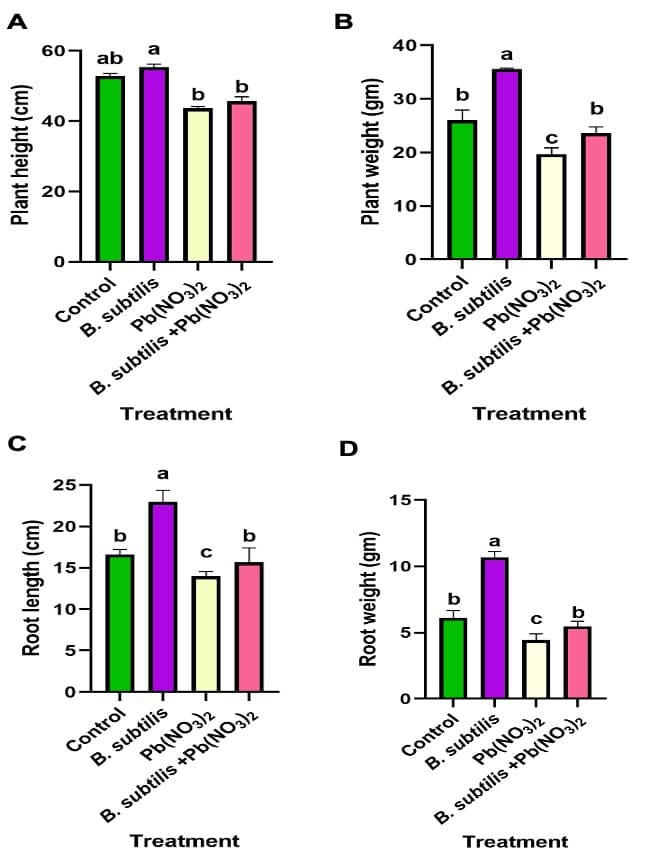
Figure 2. Analysis of plant morphology. A) plant height (cm), B) plant weight (gm), C) Root length (cm), and D) Root weight (gm). Values are expressed as Mean ± SEM. Different letters among the error bars indicate a significant difference (p < 0.05) among the group means.
Effect of B. subtilis supplementation on Brassica alba leaf traits
Pb-treatment in Brassica negatively influenced leaf-related traits (leaf number, length, width, weight, and branching). The number of Brassica leaves significantly declined in response to Pb treatment, while Pb combined with B. subtilis significantly increased the leaf number in Brassica (Figure 3A). The increased potential of leaf number was almost similar to that of the control, and plant response to single B. subtilis treatment showed the highest leaf number. In terms of root length, there were no significant differences among control, Pb, and Pb with B. subtilis treatments (Figure 3B). The leaf width trait no significant difference between Pb and Pb combined with B. subtilis (Figure 2C). The leaf weight showed almost a similar response between the Pb and Pb combined with B. subtilis (Figure 3D). Interestingly, the number of Brassica branching significantly declined, but it increased in Pb combined with B. subtilis treatment (Figure 3E).
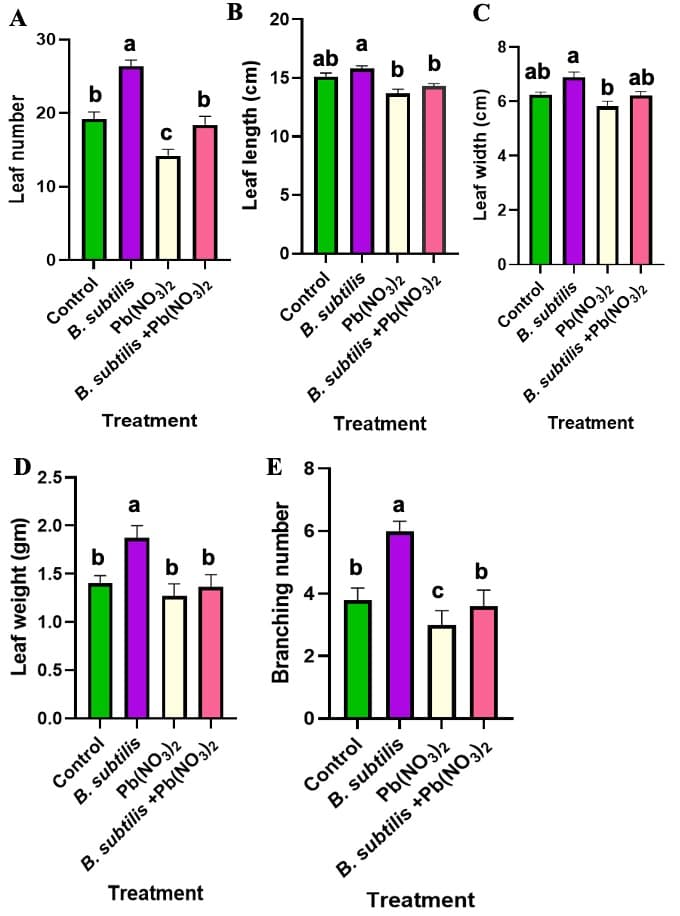
Figure 3. Analysis of plant leaf morphology. A) Leaf number, B) Leaf length (cm), C) Leaf width (cm), D) Leaf weight (gm), and E) Branching number. Values are expressed as Mean ± SEM. Different letters among the error bars indicate a significant difference (p < 0.05) among the group means.
Regulation of Brassica leaf photosynthetic pigments in response to B. subtilis
Photosynthetic pigments, including chlorophyll a, b, total chlorophyll, and carotenoid accumulation, considerably declined in response to Pb treatment. However, chlorophyll slightly increased in response to B. subtilis (Figure 4A). The chlorophyll b significantly declined under Pb but reverted in response to Pb combined with B. subtilis treatment (Figure 4B). In the case of total chlorophyll calculation, no substantial variation was observed (Figure 4C). Another key pigment, carotenoid content, significantly declined under Pb stress, while it increased significantly after supplementation of B. subtilis with that Pb treatment (Figure 4D).
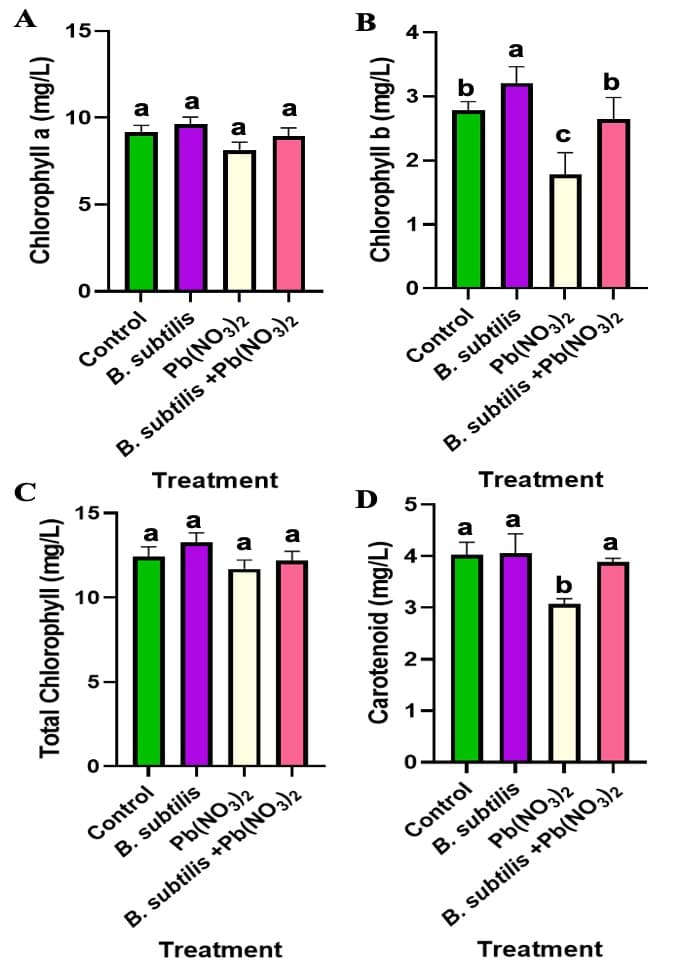
Figure 4. Biochemical Appearance A) Chlorophyll a (mg/L), B) Chlorophyll b (mg/L), C) Total Chlorophyll (mg/L), and D) Carotenoid. Values are expressed as Mean ± SEM. Different letters among the error bars indicate a significant difference (p < 0.05) among the group means.
Alteration of soluble protein content in response to B. subtilis in Brassica
Protein content declined significantly under Pb stress compared to the control. However, it increased slightly in response to Pb combined with B. subtilis (Figure 5). The soluble protein content improved in response to B. subtilis (single treatment as positive control).
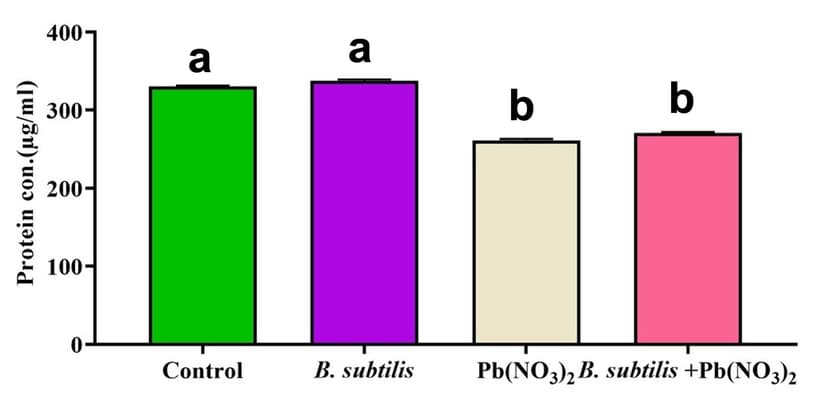
Figure 5. Analysis of Protein concentration (µg/L). Values are expressed as Mean ± SEM. Different letters among the error bars indicate a significant difference (p < 0.05) among the group means.
DISCUSSION
In this study, B. subtilis successfully mitigated the detrimental effects of lead toxicity in Brassica plants, restoring plant performance even in stressful situations. These results are consistent with an increasing amount of research emphasizing plant growth-promoting rhizobacteria (PGPR) as a sustainable strategy to address abiotic challenges, such as heavy metal contamination [16-20]. Plant growth was significantly suppressed by lead nitrate treatment, the inhibition and or decline of root, shoot length, weight, plant height, biomass yield, and leaf branching, indicating the toxicity level of Pb in Brassica plants. However, it has been proven that Pb inhibits plant morphological traits, and our finding is consistent with previous study findings [18]. In another study, growth suppression was observed in Brassica juncea exposed to moderate PB concentration (50 ppm) in hydroponic systems. In contrast, the supplementation of B. subtilis alone increased plant height and shoot weight, shoot biomass, and plant height, suggesting that the B. subtilis supplementation was fully active in response to Pb stress and reverted physiological traits in well condition and protect from Pb stress. These findings together suggest that B. subtilis could be used as a potential frontier for mitigating Pb toxicity in Brassica and other oilseed crops. This kind of recovery suggests active changes in the hormone and metabolic pathways of the plant, possibly including the creation of auxins and cytokinins, as observed by [20, 22].
Another cause of inhibiting plant growth and development is Pb-toxicity induced. oxidative stress that led to cellular injury and nutritional imbalance. In our study, B. subtilis mitigates the negative effects of growth-related traits in Brassica plants. This protective role of Bacillus species can stimulate the growth of roots and shoots under metal stress, most likely by producing plant hormones like IAA (indole-3-acetic acid), which improve the plant's ability to absorb nutrients through its roots. These hormonal changes not only increase biomass but also the surface area of the roots, which increases the plant's contact with the hydroponic solution and promotes bacterial colonization and stress reduction [21].
Our data support the well-known indicator of Pb-phytotoxicity, which is chlorophyll degradation [22]. Under Pb stress, chlorophyll a level decreased, while in the B. subtilis-treated group, suggesting the bacteria are fully active in maintaining the photosynthetic machinery, as demonstrated by the recovery of total chlorophyll in co-treated plants, most likely by the stimulation of antioxidant enzymes and decreased ROS generation [23,24]. In another study, Triticum aestivum was inoculated with B. amyloliquefaciens under cadmium exposure, showing comparable protective patterns [28-30]. With B. subtilis intervention, protein levels increase slightly, which is consistent with other findings [5]. The enhanced protein synthesis may be caused by the bacterial emission of siderophores and volatile organic compounds (VOCs), which enhance food availability and stress tolerance [30-32].
Microbial colonization in soil can be imbalanced. Hydroponics, on the other hand, offers a comfortable, reliable water-based environment that may actually enhance bacterial interactions with plant roots [32]. This could help to explain why B. subtilis performed better in this investigation than previous reports based on soil, where growth enhancement under metal stress averaged between 25 -30% [33]. Furthermore, the ability of the bacteria to produce extracellular polymeric substances (EPS) that bind metal ions supports their direct role in reducing Pb bioavailability [34].
In this current study, we have incorporated PGPR into a hydroponic system that led to bioremediation systems. Recent studies have demonstrated that effective microbes are applied to remove heavy metals in soil systems or wastewater rather than soilless growing settings [35-37]. In this work, we showed that this approach works effectively in a controlled and nutrient-rich hydroponic system, indicating that effective microbe-based efficient strategies might be useful for sustainable crop production [38]. It would be crucial for urban food production, vertical farming, and space agriculture, where contamination risks are very high, limited growing space, and the opportunity to utilize a water recycling system [39], [40].
However, the above discussions reveal that supplementation of B. subtilis is effective for mitigating Pb-toxicity in Brassica. Other microbes like Pseudomonas spp. or metal-tolerant arbuscular mycorrhizal fungus (AMF) have also been recommended as effective growth boosters and stress mitigators in plants. Recent studies corroborate this idea by showing that this type of cooperation can have a big role in mitigating metal toxicity in plants [41]. Analysing gene and protein activity patterns may help us better understand the molecular mechanisms of other bioremediation processes in plants [42]. Besides using several biostimulants [43], low-cost and cost-effective heavy metal mitigation using effective microbes provides several benefits, including plant growth, fitness, heavy metal mitigation, and tolerance in plants.
CONCLUSIONS
This study explores mechanistic insights of B. subtilis involving growth and plant biomass yield, along with mitigating Pb-toxicity in Brassica. These suggest that B. subtilis can fully activate in improving plant physiological traits through mitigating Pb-toxicity in Brassica. This approach is effective due to its cost-effectiveness and eco-friendliness for sustainable oilseed crop production. Future research should focus on deeper molecular studies of bacterial strains, and their implication at the field level for sustainable crop production and ensuring global food security.
ACKNOWLEDGEMENTS
The authors want to thank Professor Joarder DNA and Chromosome Research Laboratory, Department of Genetic Engineering and Biotechnology, University of Rajshahi, for providing the laboratory as well as the financial facilities during the research.
AUTHOR CONTRIBUTIONS
MNA and MAA: These authors contributed equally to this work: Writing – review & editing, Writing – original draft, Visualization, Validation, Methodology, Investigation, Formal analysis, Data curation, Conceptualization. BSMAA, Hadiuzzaman, MK, MAI, BS, UKA, and MFH: Writing – review & editing, Resources, Data curation. RZ: Writing – review & editing, Visualization, Validation, Supervision, Methodology, Funding acquisition, Conceptualization. All authors have approved the final version of the manuscript.
CONFLICTS OF INTEREST
There is no conflict of interest among the authors.
DECLARATION ON USING AI-ASSISTED TOOLS
During the preparation of this manuscript, the authors used artificial intelligence (AI) tools (such as Consensus and ChatGPT) to improve readability and language quality. Following the use of technological supports, the author(s) reviewed and edited the text as required and take full responsibility for the text of the publication.
References
[1]
Stegelmeier AA, Rose DM, et al. The Use of PGPB to Promote Plant Hydroponic Growth. Plants. 2022; 11:2783.
[2]
Sharma SP, Bansuli. Hydroponics in Vegetable Crops: A Review. Hydroponics. Springer Nature. 2024; 15–41.
[3]
Azizoglu U, Yilmaz N, et al. The fate of plant growth-promoting rhizobacteria in soilless agriculture: future perspectives. 3 Biotech. 2021; 11:1–13.
[4]
Anjum MAA, Hosen ME, et al. Establishment and maintenance of Brassica alba and Solanum lycopersicum on hydroponic culture at laboratory condition. Journal of Bioscience. 2023; 31:87–98.
[5]
Wróbel M, Śliwakowski W, et al. Bioremediation of heavy metals by the genus Bacillus. International Journal of Environmental Research and Public Health. 2023; 20:4964.
[6]
Kiran, Bharti R, et al. Effect of heavy metals: an overview. Materials Today Procedings. 2022; 51:880–885.
[7]
Islam A, Anjum MA, et al. Biosynthesized ZnO nanoparticles enhance salt tolerance in Brassica napus. BMC Plant Biology. 2026; 26:236.
[8]
Rocco DHE, Freire MB, et al. Bacillus subtilis as an effective tool for bioremediation of lead, copper and cadmium in water. Discover Applied Sciences. 2024; 6:1–10.
[9]
Hashem A, Tabassum B, et al. Bacillus subtilis: a plant-growth promoting rhizobacterium. Saudi Journal of Biological Sciences. 2019; 26:1291–1297.
[10]
Anjum MAA, Hosen ME, et al. Optimizing nitrogen and sulfur supplementation for enhanced growth in Solanum lycopersicum. Scientific Reports. 2026; 16:2417.
[11]
Lu Z, Guo W, et al. Isolation and characterization of novel Bacillus subtilis. The Journal of Veterinary Medical Science. 2018; 80:427–433.
[12]
Pandey S, Ghosh PK, et al. Role of heavy metal resistant Ochrobactrum sp. and Bacillus spp. in bioremediation. Journal of Microbiology. 2013; 51:11–17.
[13]
Kapusta-Duch J, Kopeć A, et al. Beneficial effects of Brassica vegetables on human health. Rocz Panstw Zakl Hig. 2012; 63:389–395.
[14]
Peter KV. Handbook of herbs and spices. 2001.
[15]
Arnon DI. Copper enzymes in isolated chloroplasts. Plant Physiology. 1949; 24:1.
[16]
Ahemad M, Kibret M. Mechanisms and applications of plant growth promoting rhizobacteria. Journal of King Saud University Science. 2014; 26:1–20.
[17]
Mellidou I, Karamanoli K. Unlocking PGPR-mediated abiotic stress tolerance. Frontiers in Sustainable Food System. 2022; 6:832896.
[18]
Sun W, Shahrajabian MH, et al. Roles of PGPR-based biostimulants. Plants. 2024; 13:613.
[19]
Sandhu SS, Kumar S, et al. Endophytic fungi: eco-friendly bioactive compounds. 2017; 303–331.
[20]
Wróbel M, Śliwakowski W, et al. Bioremediation of heavy metals by Bacillus. International Journal of Environmental Research and Public Health. 2023; 20:4964.
[21]
Shehzad J, Khan I, et al. Heavy metal tolerance mechanisms of Brassica. Environmental Science Pollution Research. 2023; 30:108448–108476.
[22]
Maslennikova D, Koryakov I, et al. Bacillus subtilis reduces cadmium toxicity in wheat. Microorganisms. 2023; 11:1653.
[23]
Nazli F, et al. PGPR for inducing heavy metal tolerance in crops. Sustainability. 2020; 12:9056.
[24]
Maslennikova D, Koryakov I, et al. Bacillus subtilis reduces cadmium toxicity in wheat. Microorganisms. 2023; 11:1653.
[25]
Shu X, Yin LY, et al. Pb toxicity on plant growth and photosynthesis. Environmental Science and Pollution Research. 2012; 19:893–902.
[26]
Karnwal A, Shrivastava S, et al. PGPR-mediated stress tolerance. Journal of Plant Growth Regulator. 2024; 43:2955–2971.
[27]
Gupta M, Dwivedi V, et al. Lead toxicity in plants. Plant Signal & Behaviour. 2024; 19.
[28]
Zulfiqar U, Ayub A, et al. Cadmium Toxicity in Plants: Recent Progress on Morpho-physiological Effects and Remediation Strategies. Journal of Soil Science and Plant Nutrition. 2022; 22:212–269.
[29]
Naz T, Iqbal MM, et al. Green remediation of lead (pb) from Pb-toxic soil by combined use of silicon nanomaterials and leguminous Lens culinaris L. plants. Scientific Reports. 2025; 15:4366.
[30]
Maslennikova D, Koryakov I, et al. Endophytic Plant Growth-Promoting Bacterium Bacillus subtilis Reduces the Toxic Effect of Cadmium on Wheat Plants. Microorganisms. 2023; 11:1653.
[31]
Aslam MM, Okal EJ, et al. Cadmium toxicity and remediation strategies. Plant Growth Regulation. 2023; 99:397–412.
[32]
Laller R, Kosla PK, et al. Bacterial volatiles as PGPRs: Inducing plant defense mechanisms during stress period. South African Journal of Botany. 2023; 159:131–139.
[33]
Wang Y, Narayanan M, et al. Plant growth-promoting bacteria in metal-contaminated soil: Current perspectives on remediation mechanisms. Frontiers in Microbiology. 2022; 13:966226.
[34]
Wood JL, Liu W, et al. Microorganisms in heavy metal bioremediation: strategies for applying microbial-community engineering to remediate soils. AIMS Bioengineering. 2016; 3:211–229.
[35]
Sela Saldinger S, Rodov V, et al. Hydroponic agriculture and microbial safety. Horticulturae. 2023; 9:51.
[36]
Naqqash T, Aziz A, et al. Heavy metal-resistant rhizobacteria fosters to alleviate the cadmium toxicity in Arabidopsis by upregulating the plant physiological responses. International Journal of Phytoremediation. 2024; 26:557–568.
[37]
Haque MA, Islam R, et al. Redefining the roles of enterobacterales endophytes in sustainable crop production. Plant Trends. 2025; 3:71-88.
[38]
Ahmed T, Rahman MS, et al. Utilization of endophytic bacteria for liquid biofertilizer production with a newly designed prototype fermentor for plant improvement. Plant Trends. 2024;2:92-107.
[39]
Lakhiar IA, Yan H, et al. Soilless Agricultural Systems: Opportunities, Challenges, and Applications for Enhancing Horticultural Resilience to Climate Change and Urbanization. Horticulturae. 2025; 11:568.
[40]
Khoo KS, Chia WY, et al. Microalgal-bacterial consortia in wastewater bioremediation. Indian Journal of Microbiology. 2021; 61:262–269.
[41]
Ren P, Zhou B, et al. Bacillus subtilis enhances drought resistance. Agric Water Manag. 2026; 327:110287.
[42]
Das K, Sarker A, et al. Harnessing plant–microorganism interactions for nano-bioremediation of heavy metals: Cutting-edge advances and mechanisms. Plant Trends. 2025;3:01-12.
[43]
Roy SK, Naimuzzaman M, et al. Glutathione: A key frontier of heavy-metal detoxification and tolerance in plants. Plant Trends. 2023;1:33-42.
Share and Cite
Harvard Style
Aungum, M. and Anjum, M. and Amzad, B. and -, H. and Khalekuzzaman, M. and Islam, M. and Sikdar, B. and Acharjee, U. and Hossain, M. and Zaman, R., 2026, 'Bacillus subtilis mitigates lead-induced toxicity through regulating physiological and biochemical attributes in Brassica alba L.', Toxicant Research, vol. 2, no. 1, pp. 01-11.
ACS Style
Aungum, M.; Anjum, M.; Amzad, B.; -, H.; Khalekuzzaman, M.; Islam, M.; Sikdar, B.; Acharjee, U.; Hossain, M.; Zaman, R. Bacillus subtilis mitigates lead-induced toxicity through regulating physiological and biochemical attributes in Brassica alba L.. Toxicant Research 2026, 2(1), 01-11. https://doi.org/10.66439/tr.2026.01
AMA Style
Aungum, M.; Anjum, M.; Amzad, B.; -, H.; Khalekuzzaman, M.; Islam, M.; Sikdar, B.; Acharjee, U.; Hossain, M.; Zaman, R. Bacillus subtilis mitigates lead-induced toxicity through regulating physiological and biochemical attributes in Brassica alba L.. Toxicant Research. 2026;2(1):01-11. https://doi.org/10.66439/tr.2026.01
Chicago/Turabian Style
Aungum, Mst. Nishat ; Anjum, Mostofa Asif ; Amzad, B. S. M. Anowar ; -, Hadiuzzaman; Khalekuzzaman, Md. ; Islam, Md. Asadul ; Sikdar, Biswanath ; Acharjee, Uzzal Kumar ; Hossain, Md. Firose ; Zaman, Rashed . 2026. "Bacillus subtilis mitigates lead-induced toxicity through regulating physiological and biochemical attributes in Brassica alba L." Toxicant Research 2, no. 1: 01-11. https://doi.org/10.66439/tr.2026.01
APA Style
Aungum, M.; Anjum, M.; Amzad, B.; -, H.; Khalekuzzaman, M.; Islam, M.; Sikdar, B.; Acharjee, U.; Hossain, M.; Zaman, R. (2026). Bacillus subtilis mitigates lead-induced toxicity through regulating physiological and biochemical attributes in Brassica alba L.. Toxicant Research, 2(1), 01-11. https://doi.org/10.66439/tr.2026.01
Article Metrics
Article Access Statistics
Article Info
Academic Editor
Md.Injamum-Ul- Hoque, PhD
Received
27 January 2026
Accepted
20 March 2026
Published
25 March 2026
Article DOI
10.66439/tr.2026.01Corresponding Author
Rashed Zaman
,Professor Joarder DNA and Chromosome Research Laboratory, Department of Genetic Engineering and Biotechnology, University of Rajshahi, Rajshahi 6205, Bangladesh
;Email: rashedzaman@ru.ac.bd
Cite this article
Aungum M, Anjum M, Amzad B, - H, Khalekuzzaman M, Islam M, Sikdar B, Acharjee U, Hossain M, Zaman R. Bacillus subtilis mitigates lead-induced toxicity through regulating physiological and biochemical attributes in Brassica alba L.. Toxicant Res. 2026; 2(1), 01-11. 2026; 2(1): 01-11