Loading...
Uncontrolled use of chemical pesticides in vegetable crops: A growing food safety crisis in Bangladesh
Md. Nahid Mahmud
,Probir Kumar Mittra
,Md Atikur Rahman
Abstract
Vegetables are essential items of daily commodities. In Bangladesh, vegetable production significantly improved in recent decades due to increased demand for diversity in diet, income generation, and improved demand for vegetable production globally. Unfortunately, the expansion of using chemical pesticides equally dramatic rise in controlling disease and pests during vegetable production. Recent studies indicate that widespread use of pesticide residues (PRs), such as chlorpyrifos, diazinon, malathion, quinalphos, in brinjal (eggplant), tomato, cauliflower, cucumber, guard, and beans. Excessive use of these pesticides crossed the internationally acceptable Maximum Residue Limits (MRLs). The uncontrolled use of these pesticides, combined with other chemical toxicants, limited farmers’ training with low assurance of safety standards, which created a significant food safety crisis in Bangladesh. This study discovers that more than 29% vegetable samples were contaminated with chemical pesticides, and among the contaminated vegetable samples, about 73% crossed the MRLs. The Hazard Quotient (HQ) index value for adolescents and adults in commonly used vegetable eggplant, tomato, and bean indicate non-carcinogenic risks, while multiple PRs are present in single vegetables indicate substantial and significant health hazards. This study further connects the experiential data from multiple studies across Bangladesh, and focuses on the ways of contamination, significant health risks, limitations in regulatory frameworks, lack of implementation for policy and practice levels. The data presented in the table summarizes residue prevalence and health risk indicators, and two conceptual figures underline the pesticide entry and risk factors. This study recommends sustainable pesticide management, ensuring cost-effective and environmentally friendly agricultural practices at the farmer level, and consumer awareness, which are highly required to ensure sustainable vegetable production, food safety, and public health in Bangladesh.
INTRODUCTION
Vegetables are daily food items in the diet, providing vitamins, minerals, dietary fiber, and also sustaining the smallholder incomes and their rural livelihoods [1]. Over the past few decades, a rapid increase in vegetable production has been observed [2], [3]. As a consequence, a trend of pesticide application in vegetable crops has also increased. The most alarming thing is that farmers are often relying heavy in synthetic chemical pesticides to control pests, disease, and ensure targeted yield [4]. The PRs, including chlorpyrifos, diazinon, carbamates, dimethoate, and others, are widely used without adequate training, optimum dose, and safety measures [5].
Nowadays, the overuse of chemical pesticides in vegetable production is a common practice at the field level in Bangladesh [6]. It has been studied that the fruit and shoot borer causes severe yield loss, and around 140 or more-time application per season are required to control the pest. In addition, inadequate farmer training, improper dose and pesticide selection, and lack of residue monitoring systems induce potential health risks and insecure food safety. Thus, it is crucial to explore low-cost, effective, and eco-friendly strategies for sustainable and safe vegetable production in Bangladesh.
This study comprehensively addresses the concrete evidence on uncontrolled use of toxic pesticides during vegetable production in Bangladesh. This review highlights the PRs that are commonly and widely used in vegetable crop production, associated health risks, responsible factors, limitations in policy and practice, along with hazard mitigation strategies in vegetable crops.
PATTERNS OF PESTICIDE CONTAMINATION IN VEGETABLES
Vegetable crops are infected by diverse pests and diseases [7, 8]. To combat this infection, farmers apply chemical pesticides to protect the yield and quality of vegetable crops. However, it has been found that excessive use of pesticides is a common practice; rural farmers are not following the recommended dose during agricultural practice. A recent study on vegetable crops has found that more than 29% (1577 vegetable samples) of vegetable samples were contaminated with pesticide residues [5]. The organophosphorus class of pesticides was detected as the highest contaminant, followed by pyrethroids, organochlorines, nereistoxin analogues, and neonicotinoids. However, the chlorpyrifos, dimethoate, diazinon, and malathion pesticides were the most frequently used chemical pesticides.
This updated study further explored the frequency (%) of pesticide contamination in different vegetables: a total 51% cucumber samples were contaminated with PRs, followed by tomato (41%), cauliflower (31%), brinjal (29%), and beans (23%). Cabbage 18%, and gourds 16%) (Figure 1). The most alarming that among the pesticide-contaminated vegetable samples, a majority of the samples crossed the MRLs. For instance, Khatun et al found that 100% sample of guards, 92% of beans, 78% of tomato, 73% of eggplant, 62% of cucumber, 50% of cauliflower, and 50% of cabbage samples exceeded the Maximum Residue Limits (MRLs) [5]. The market surveillance studies confirm the widespread pesticide presence in vegetables. Hasan et al analyzed a total of 50 vegetable samples (30 of cauliflower and 20 of cucumber), and found that 16.7% were contaminated by chlorpyrifos, quinalphos, acephate, and dimethoate, all above the European Union-Maximum Residue Limits (EU-MRLs), where 4 samples contained multiple pesticide residues [9] as shown in Table 1. In contrast, 10% of cucumber samples were contaminated by quinalphos and chlorpyrifos, which do not exceed the EU-MRLs [9]. Tasnim et al explored the most notable concern and confirmed the frequent co-occurrence of multiple pesticides within one vegetable sample [10]. This study suggests that combined toxicological effects can differ from those of a single compound alone.
Table 1. Multiple pesticide residues within a single vegetable consumed in Bangladesh [5].
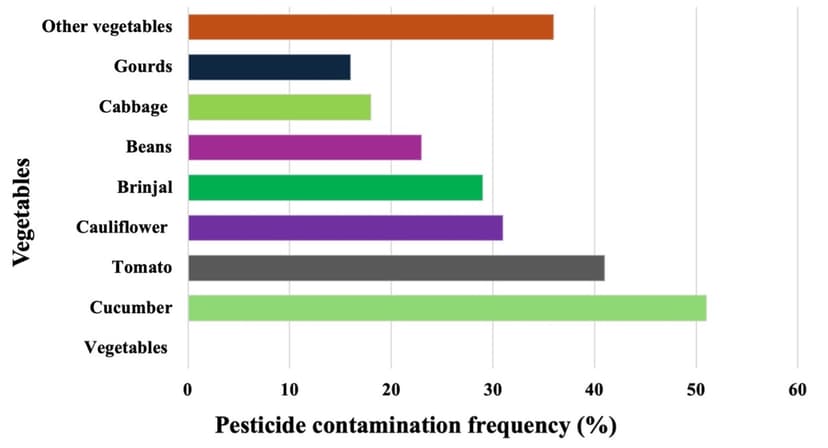
Figure 1. The recent scenario of pesticide-contamination in different vegetables, including cucumber, tomato, cauliflower, brinjal, beans, cabbage, and gourds, produced in Bangladesh [5].
FACTORS OF UNCONTROLLED USE OF PESTICIDES
Farmer practices and knowledge gaps are strongly linked to the uncontrolled use of pesticides in vegetable crops. Many farmers do not follow the recommended dose of application and do not maintain the withdrawal period after pesticide application. A recent study conducted in Narsingdi district by Khatun et al, and found that carbamate and organophosphorus pesticides are excessively used on brinjal, cauliflower, and beans, where farmers are unconscious pesticides toxicity and health risks and environmental consequences [5]. Recently, research conducted on consumer awareness at Dhaka, Gazipur, and Mymensingh markets that resealed that around 60% consumers believe most of the vegetables are contaminated at the field level due to excessive use of chemical pesticides [11].
Excessive use of insecticides to control pest attack and yield is one of the key factors for uncontrolled use of pesticides. A report published by the US Global Hunger and Food Security Initiative in 2022 revealed that about 98% of Southwest Bangladeshi Farmers frequent use insecticides to control fruit and shoot borer in eggplant, and they spray daily during the peak season of brinjal, which leads to high pesticide loads in vegetable crops. Moreover, lack of activation of regulatory frameworks and execution of low enforcement are the vital factors for uncontrolled use of pesticides. Several groups of pesticides are highly toxic; most of the farmers are not well-trained on these hazardous pesticides, and they are not aware of the toxicity and health risks. Only a small number of farmers receive formal training on safe pesticide handling, and many of them spray or apply pesticides in the field without personal protective equipment [12].
HUMAN HEALTH RISKS AND ENVIRONMENTAL IMPACTS
Health risks are measured using the Hazard Quotient (HQ) indicator for non-carcinogenic effects and the Estimated Daily Intake (EDI) basis (Table 2). A recent review revealed that acute and chronic HQ values for cypermethrin in beans among adolescents and adults have significantly increased, indicating the high health risk in dietary vegetables exposed to toxic pesticides [13]. In case of consuming other vegetables include tomato, brinjal, cauliflower, cabbage, and cucumber, exhibited value above the safe thresholds, indicating consumption of these items can be a carcinogenic health risk [13]. Besides pesticide exposure to consumer dietary exposure, it severely impacts the ecosystem. For instance, organophosphorus and neonicotinoid pesticides decline soil fertility and health, beneficial insects, and bird species. Moreover, leaching of PRs into water leads to water pollution of water bodies (Figure 2).
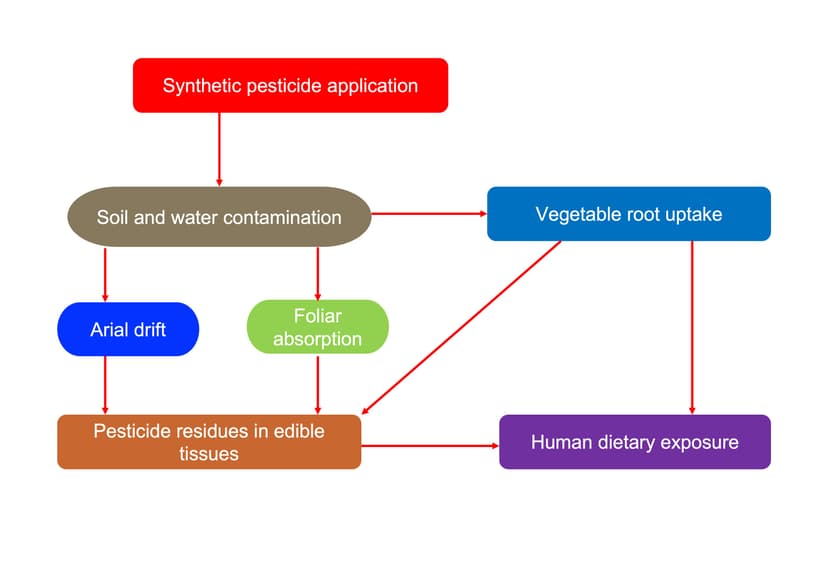
Figure 2. Routes of pesticide entry into vegetable crops. This conceptual model represents the synthetic pesticide application during vegetable production, and their toxic impacts on soil, water, plant edible tissue, and ultimately human dietary exposure.
Table 2. Health risk indicators for PRs exposures in vegetables grown in Bangladesh.
SUSTAINABLE STRATEGIES FOR MITIGATING PESTICIDE TOXICITY IN VEGETABLES
Bangladeshi vegetable consumers face high challenges in mitigating frequent pesticide contamination in daily consumed food crops and vegetables. Insufficient monitoring systems, low opportunities for testing PRs, and weak enforcement systems are the major challenges to minimizing pesticide contamination during vegetable production. In this scenario, it is a prerequisite to strengthen the Bangladesh Food Safety Authority (BFSA), engage skilled toxicologists, improve laboratory infrastructure, and establish an active, regular surveillance system. Sustainable agricultural practice, eco-friendly and cost-effective strategies should be introduced at the field level [14, 15]. Proper training on good agricultural practices (GAP) and integrated pest management (IPM) can be helpful to minimize the misuse of pesticides. With these, safe pesticide selection, maintaining the pesticide withdrawal periods, concern on optimum dose, safety, and efficacy of pesticides, and maintaining PPE can reduce pesticide toxicity, contamination, and health risks.
In addition, consumers’ awareness and demand for safer production of vegetables would ensure the safe vegetable production for Bangladeshis food security. Eco-friendly and cost-effective liquid biofertilizer should be introduced as an alternative to chemical pesticides. In this context, several effective microbes include Trichoderma, Arbuscular mycorrhiza fungi (AMF), and vegetable growth-promoting endophytes, can be promising alternatives to chemical pesticides [14-16]. In addition, Trichoderma can be used as a potential biocontrol agent and an alternative to toxic pesticides for the development of pest and disease-resistant vegetable crops using biotechnological approaches like molecular breeding and genome editing approaches.
MOLECULAR APPROACHES FOR DETOXIFYING, REMOVAL, OR TOLERANCE OF PESTICIDE TOXICITY
Several molecular and biotechnological approaches would be crucial for mitigating pesticide toxicity in plants (Figure 3). For instance, overexpression of detoxifying enzymes induces pesticide metabolism in plant tissues. Transgenic plants overexpressing glutathione S-transferase (GST) metabolize toxic pesticides more efficiently. Editing the chloroplast genome (plastid) is known as the transplastomic approach. In this transplastomic process, plastic can possess multiple genes in cells that lead to strong expression of key proteins like pesticide-binding proteins or hydrolases. Pest or plant genes can be silenced using an RNA interference (RNAi) approach for reducing pesticide accumulation or enhancing endogenous detoxification processes (Figure 3). Moreover, RNAi constructs often target regulatory enzymes, which regulate the pesticide metabolism process in plants, thereby decreasing pesticide load and enhancing tolerance in plants.
Genome editing tools, including ZCRISPR-Cas, TALEN, and ZFNs, precisely change the plant genome. Minimizing pesticide uptake and enhancing their detoxification process can be achieved. For instance, gene knocking out or enhancing the expression of candidate genes, which encode degradation enzymes. Multi omics (genomics, transcriptomics, proteomics, and metabolomics) would be suitable to reveal genetic variants, gene expression changes in response to toxic pesticides, and identify protein candidates [17], and metabolic changes, which lead to detoxify herbicide or help to explore herbicide-tolerant crops (Table 3, Figure 3). Exogenous supplementation of plant growth regulators (SA, JA, BSs, MT), key antioxidants effective approach for detoxifying or mitigating pesticide toxicity in crops [18], [19]. Such growth regulators can be used as biostimulants to trigger plant defense and detoxification systems, declining pesticide accumulations in vegetables. Moreover, farmers’ awareness and application of modern agricultural technologies are promising for initial screening pesticide and detecting toxicity levels for vegetables [20].
Pesticide detecting advanced technologies, such as Roman spectroscopy, biosensors, QuEchERS extraction combined with GC-MS or LC-MS, lead to quantifying pesticide residue in vegetables. Phytoremediation is another strategy to absorb, transform, and sequester chemical pesticides from the soil or water. In this process, plants use several mechanisms include phytoextraction, phytodegradation, rhizodegradation, and phytofiltration of pesticides in vegetable crops. Enhancing phytoremediation using biotechnological tools, are able to produce hyperaccumulator crops or introducing beneficial microbes, would be crucial for pesticide degradation in vegetable crops. Microbial bioremediation using bacteria, fungi, and algae contains key enzymes (peroxidases, esterase, and laccases), and nano-bioremediation approaches, which would be smart and suitable tools for degrading or mitigating pesticides in retables [21] (Figure 3). Using the fungal system, known as microremediation use non-specific oxidases to degrade recalcitrant pollution. Lowering pesticide toxicity using bioactive metabolites from probiotics is another strategy. This mechanism includes detoxifying pesticides via enzymatic hydrolysis, chemical pesticide-induced oxidative stress mitigation in cells, and regulation of host xenobiotic metabolism. However, foliar spray or supplementation of root zone amendments would be a cost-effective and eco-friendly strategy for reducing pesticide burdens and ensuring food safety [14].
Table 3. Modern strategies for detoxifying and mitigating pesticide residues in vegetable crops
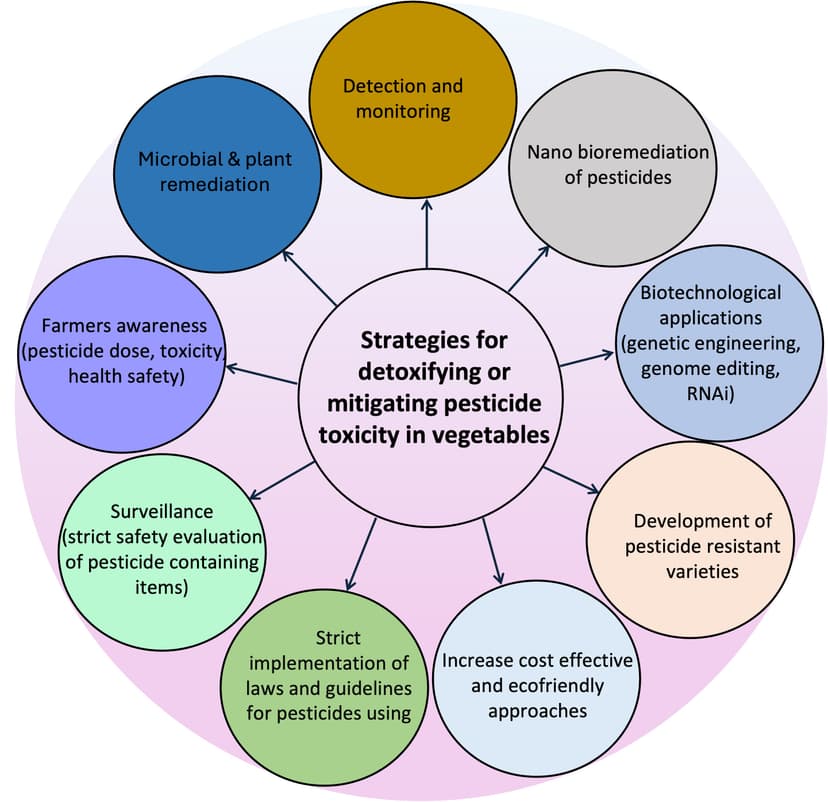
Figure 3. A conceptual integrated model overviewing strategies for detoxifying or mitigating pesticide toxicity in vegetable crops.
CHALLENGES AND FUTURE PROSPECTS
Several regulatory and safety concerns should be maintained. Genetically modified pesticide tolerant vegetable should pass a strict safety evaluation for environmental and human health. Genome editing crop development guidelines are different globally. Thus, it is affecting the deployment time frames. The studied plants and microbes for engineering must be validated in soil environments, where plant-soil-microbe interactions are present. Side-specific customization is required for the bioremediation approach. Public acceptance of genetically modified or genome-edited vegetables is another challenge; the safety, efficacy, risk, and benefits of genome-edited, or genetically modified, vegetables or pesticide-tolerant vegetables must be declared. If we are able to resolve the above challenges, then it may open a new dimension of research on the decline in dependency on the overuse of chemical pesticides in vegetable crops.
CONCLUSIONS
This study explores the present scenario of uncontrolled use of pesticides in Bangladesh’s vegetables, indicating a serious concern on food safety crisis. Updated studies on uncontrolled use of toxic pesticides from district and upazila or rural regions confirm that the PRs are widely present in distinct vegetables, which often exceed the MRLs. These extensive contaminations occurred due to uncontrolled application, inadequate farmer training, and weak implementation of food safety and surveillance systems. Multiple PRs in a single vegetable induce high health risks, especially for the nonvulnerable class of people, such as children and pregnant women (Table 1). Risk assessment indicator such as HQs, reveal non-carcinogenetic crossed the threshold are found in everyday consumed vegetable include beans, tomato, eggplant (brinjal), and cauliflower. Thus, to address the pesticides involving vegetable contaminations, multi-level policies and stakeholder engagements are required, such as a regulatory enforcement and monitoring system, implementation of GAP, ensure to supply of safer vegetables to consumers, increase consumers awareness through print and electronic media, and development of cost-effective and eco-friendly strategies for insecticide-free vegetable production. Such integrated strategies can reduce pesticide contamination in vegetables, protect consumer and farmer health with sustainable vegetable production. Future research should focus on underlining the occurrence of multiresidue exposures, preparation of dietary exposure risk models, and development of pesticide-free vegetables using cost-effective and eco-friendly approaches [14].
ACKNOWLEDGEMENTS
None.
AUTHOR CONTRIBUTIONS
MNM, MAR, and PKM conceived the research plan and wrote the initial draft of the manuscript. MNM, MAR, and PKM wrote and edited the manuscript. MAR supported figure drawing. All the authors approved the final version of the manuscript.
CONFLICTS OF INTEREST
There is no conflict of interest among the authors.
References
[1]
Zihad SMNK, Gupt Y, et al. Nutritional value, micronutrient and antioxidant capacity of some green leafy vegetables commonly used by southern coastal people of Bangladesh. Heliyon. 2019;5:e02768.
[2]
Khanam M, Akter S, et al. Polybag-mediated microplastics in fruits and vegetables: Emerging global threat to health. Toxicant Research. 2025;1:07-18.
[3]
Uddin MJ, Moni A. Toxicants in daily fresh produce in bangladesh: A potential cause of kidney damage. Toxicant Research. 2025;1:05-6.
[4]
Lengai GMW, Muthomi JW, et al. Phytochemical activity and role of botanical pesticides in pest management for sustainable agricultural crop production. Scientific African. 2020;7:e00239.
[5]
Khatun P, Islam A, et al. Pesticides in vegetable production in bangladesh: A systemic review of contamination levels and associated health risks in the last decade. Toxicology Reports. 2023;11:199-211.
[6]
Wan B, Zhou E, et al. Pesticide overuse in vegetable production: A case study of urban agriculture in city x, china. Environmental Research Communications. 2023;5:085012.
[7]
Alam MKA, Rahman MM, et al. Screening of antagonistic potential bacteria from rhizosphere soil against phytopathogenic fungi related to selected vegetable crops. Journal of Advanced Biotechnology and Experimental Therapeutics. 2020;4:35-43.
[8]
Humpy B, Kumar SS, et al. Influence of fruits and vegetables waste pre-treatment on black soldier fly larval growth. Journal of Advanced Biotechnology and Experimental Therapeutics. 2022;6:01-8.
[9]
Hasan R, Alam MM, et al. Monitoring of pesticide residues in vegetables collected from retail markets of dhaka district of bangladesh using quechers extraction and gas chromatography. Asian-Australasian Journal of Food Safety and Security. 2021;5:63-70.
[10]
Tasnim N, Millat MN, et al. Multiple pesticide residue determination in major vegetables purchased from gazipur district of bangladesh. Asian-Australasian Journal of Food Safety and Security. 2022;6:57-64.
[11]
Alam MA. Consumer awareness and perceptions of pesticide residues in vegetables in bangladesh. Research in Agriculture Livestock and Fisheries. 2024;11:25-33.
[12]
Begum IA, Alam MJ, et al. Pesticide safety behavior among vegetable farmers in bangladesh: Evaluating the role of market aggregation services. Heliyon. 2025;11:e41013.
[13]
Khatun P, Islam A, et al. Pesticides in vegetable production in bangladesh: A systemic review of contamination levels and associated health risks in the last decade. Toxicol Reports. 2023;11:199-211.
[14]
Md. Azizul H, Richita I, et al. Redefining the roles of enterobacterales endophytes in sustainable crop production. Plant Trends. 2025;3:71-88.
[15]
Tanweer A, Md Shahriar R, et al. Utilization of endophytic bacteria for liquid biofertilizer production with a newly designed prototype fermentor for plant improvement. Plant Trends. 2024;2:92-107.
[16]
Abdur Rahman Al M, Rubel M, et al. Moringa and neem leaf extracts-mediated seed priming improves plant growth, biomass, and grain yield in chickpea (Cicer arietinum l.). Plant Trends. 2025;3:103-13.
[17]
Goh MS, Lam SD, et al. Omics technologies used in pesticide residue detection and mitigation in crop. Journal of Hazardous Materials. 2021;420:126624.
[18]
Bao D, Chang S, et al. Advances in the study of auxin early response genes: Aux/iaa, gh3, and saur. The Crop Journal. 2024;12:964-78.
[19]
Swapan Kumar R, Mollah N, et al. Glutathione: A key frontier of heavy-metal detoxification and tolerance in plants. Plant Trends. 2023;1:33-42.
[20]
Md. Nahid M, Fahmida T, et al. Leveraging modern technologies in agriculture: Recent progress and prospects in Bangladesh. Plant Trends. 2025;3:13-32.
[21]
Kallol D, Aniruddha S, et al. Harnessing plant–microorganism interactions for nano-bioremediation of heavy metals: Cutting-edge advances and mechanisms. Plant Trends. 2025;3:01-12.
[22]
Oliveira AR, Barros SC, et al. Strategies to determine and mitigate pesticide residues in food. Molecules. 2026;31:63.
[23]
Hossain ME, Shahrukh S, et al. Chemical fertilizers and pesticides: Impacts on soil degradation, groundwater, and human health in bangladesh. In: Singh VP, Yadav S, et al., editors. Environmental degradation: Challenges and strategies for mitigation. Cham: Springer International Publishing; 2022. p. 63-92.
[24]
Kabir AH, Rahman MA, et al. Mechanistic assessment of tolerance to iron deficiency mediated by trichoderma harzianum in soybean roots. Journal of Applied Microbiology. 2022.
[25]
Dinakarkumar Y, Ramakrishnan G, et al. Fungal bioremediation: An overview of the mechanisms, applications and future perspectives. Environmental Chemistry and Ecotoxicology. 2024;6:293-302.
[26]
Weng S, Zhu W, et al. Rapid detection of pesticide residues in paddy water using surface-enhanced raman spectroscopy. Sensors. 2019;19:506.
[27]
Kafle A, Timilsina A, et al. Phytoremediation: Mechanisms, plant selection and enhancement by natural and synthetic agents. Environmental Advances. 2022;8:100203.
[28]
Jan S, Singh R, et al. Plant growth regulators: A sustainable approach to combat pesticide toxicity. 3 Biotech. 2020;10:466.
Share and Cite
Harvard Style
Mahmud, M. and Mittra, P. and Rahman, M., 2025, 'Uncontrolled use of chemical pesticides in vegetable crops: A growing food safety crisis in Bangladesh', Toxicant Research, vol. 1, no. 1, pp. 35-43.
ACS Style
Mahmud, M.; Mittra, P.; Rahman, M. Uncontrolled use of chemical pesticides in vegetable crops: A growing food safety crisis in Bangladesh. Toxicant Research 2025, 1(1), 35-43. https://doi.org/10.5454/tr.2025.05
AMA Style
Mahmud, M.; Mittra, P.; Rahman, M. Uncontrolled use of chemical pesticides in vegetable crops: A growing food safety crisis in Bangladesh. Toxicant Research. 2025;1(1):35-43. https://doi.org/10.5454/tr.2025.05
Chicago/Turabian Style
Mahmud, Md. Nahid ; Mittra, Probir Kumar ; Rahman, Md Atikur . 2025. "Uncontrolled use of chemical pesticides in vegetable crops: A growing food safety crisis in Bangladesh" Toxicant Research 1, no. 1: 35-43. https://doi.org/10.5454/tr.2025.05
APA Style
Mahmud, M.; Mittra, P.; Rahman, M. (2025). Uncontrolled use of chemical pesticides in vegetable crops: A growing food safety crisis in Bangladesh. Toxicant Research, 1(1), 35-43. https://doi.org/10.5454/tr.2025.05
Article Metrics
Article Access Statistics
Article Info
Academic Editor
Md. Abdul Hannan
Received
26 November 2025
Accepted
23 December 2025
Published
28 December 2025
Article DOI
10.5454/tr.2025.05Corresponding Author
Md Atikur Rahman
,Institute of Biological Sciences, University of Rajshahi, Rajshahi 6205, Bangladesh
;Email: atik.rahmanbt@gmail.com
Cite this article
Mahmud M, Mittra P, Rahman M. Uncontrolled use of chemical pesticides in vegetable crops: A growing food safety crisis in Bangladesh. Toxicant Res. 2025; 1(1), 35-43. 2025; 1(1): 35-43