Loading...
Toxicological and biological profile of patients with psychoactive substance use disorders at the psychiatric unit of Point G University Hospital, Bamako, Mali
Tidiane Diallo
,Mahamadou Fofana
,Fatoumata Bagayoko
,Korotoumou Koloma
,Souleymane dit Papa Coulibaly
,Sanou Khô Coulibaly
Abstract
Psychoactive substance (PAS) use among young people represents a major global public health problem, particularly in Sub-Saharan Africa. This study assessed the biological and toxicological profiles of patients admitted to the tertiary psychiatric care unit of Point G University Hospital, Bamako, Mali, with PAS-related psychiatric disorders. A prospective cross-sectional study was conducted among 100 patients admitted for PAS-related disorders. Urine samples were tested for cannabis, cocaine, amphetamines, alcohol, and opiates, while blood tests were performed to evaluate biochemical and hematological parameters. Males represented 97% of the population, with cannabis and alcohol being the most commonly self-reported substances. Toxicology tests confirmed the presence of cannabis, amphetamine, and cocaine, with a significant difference between the patient's self-reported data and the laboratory results. Biochemical markers revealed abnormalities with p<0.05 for transaminases and creatinine. The mismatch between self-reports and toxicological results underscores the need for systematic biological monitoring. The establishment of a poison control centre, psychosocial support, and prevention strategies are necessary to tackle PAS abuse.
INTRODUCTION
Psychoactive substances (PAS) use is a major global public health problem, contributing to global morbidity, mortality, and social disruption. According to the World Drug Report 2023, 292 million people worldwide were using illicit drugs in 2021, a 20% increase from the previous decade, with 64 million people diagnosed with substance use disorders. In Sub-Saharan Africa, the burden of PAS uses rapidly increased, driven by socioeconomic vulnerabilities, urbanization, and limited access to prevention and curative services [1], [2]. PAS use is associated with increased risk behaviors, including violence and unprotected sex, and serious health outcomes, such as sexually transmitted infections, mental health problems, and chronic diseases [3]-[5]. The consequences extend beyond the individual and affect families and society.
PAS use is generally defined as the regular use of any natural or synthetic substance for its psychoactive properties in amounts that cause harm to users or others [6]. In sub-Saharan Africa, particularly in Mali, this use has reached alarming levels [3, 7]. In 2022, 161 patients sought treatment for drug use at the psychiatry unit of the Point G University Hospital (CHU Point G) in Mali [8]. Our previous work has shown that addictive substances accounted for 5.2% of poisoning between 2000 and 2010, with an average age of use of 24 years and motivations mainly recreational or performance-related [7], [9].
Most previous studies have been limited in scope, focusing primarily on analyzing the epidemiological profile of PAS use. Few studies, however, have explored the detection of these substances in biological matrices. Thus, the present study characterizes the sociodemographic and substance use profiles, assesses biochemical and AST parameters to evaluate the physiological impact of PAS use in patients admitted to the psychiatry department of CHU Point G for PAS-related disorders.
MATERIALS AND METHODS
Study design
We conducted a prospective cross-sectional study from May 2024 to November 2025 at the psychiatry department of CHU Point G, the primary mental health care provider within Mali's conventional health system. Patients admitted for PAS-related disorders during the study period were eligible for inclusion. All patients admitted for PAS-related disorders during the study period were invited to attend. Exclusion criteria included inability or refusal to give informed consent or refusal, serious psychiatric conditions that would impair participation, and pre-existing medical conditions (diabetes mellitus, obesity, hypertension, or other systemic diseases) that might interfere with biochemical and hematological parameters.
Ethical consideration
Approval of the study was obtained from the Protocol Review Committee of the School of Pharmacy and the Department of Psychiatry (No. 2024/170/FAPH-DECANAT). Informed consent was obtained from all participants. For patients under the age of 18, consent from a parent or legal guardian, as well as the participants’ assent, was obtained. Study data were processed anonymously and confidentially.
Sample collection and analysis
The samples were analyzed at the Department of Pharmacology and Toxicology (SPT) of the National Institute of Public Health (INSP). Urine and blood samples were collected within 48 hours of admission. Urine samples were screened for delta-9-tetrahydrocannabinol (THC) (Siemens Healthcare Diagnostics, USA, Ref 9N039UL), cocaine metabolites (Siemens Healthcare Diagnostics, USA, Ref 9H03UL), opioids (Siemens Healthcare Diagnostics, USA, Ref 9B039UL), and amphetamines (Siemens Healthcare Diagnostics, USA, Ref 9C039UL/) using the enzyme-multiplied immunoassay technique (EMIT) with the Viva-ProE instrument. This equipment allows qualitative and/or quantitative determination of medications as well as psychoactive substances (alcohol, cannabis, cocaine, amphetamine, etc.) in urine, whole blood, serum, or cerebrospinal fluid. Positivity thresholds were established for THC 20 ng/mL, cocaine 150 ng/mL, opioids 300 ng/mL, and amphetamines 500 ng/mL, consistent with manufacturer recommendations. The concentration of psychoactive substances was determined using the following formula:
C=FxAbs
Where C: concentration of the substance in ng/mL; F: fixed factor (the ratio of the standard concentration to the standard absorbance); and Abs: absorbance of the sample.
Biochemical parameters such as creatinine, blood glucose, alanine aminotransferase (ALT), and AST (aspartate aminotransferase) were measured using the Kenza 240 THX biochemical analyzer (Biosystems, Spain). Complete blood count (CBC) was performed using the Atellica Hema 850 analyzer (Siemens Healthineers, Germany). All analyses were conducted according to ISO 15189 protocols.
Statistical analysis
Data were entered using Word and Excel 2016 for Windows. Analysis and processing were performed using R software, version 4.4.1. Spearman's correlation was applied to assess associations between cannabis concentrations and biological parameters in patients who tested positive. The chi-square test was used to compare categorical variables. Since the biological parameters did not follow a normal distribution, the Wilcoxon test was applied. Linear regression was performed on biological parameters (ALT, AST, creatinine, and plasma glucose) to assess association with cannabis positivity while controlling for age, self-reported alcohol consumption, and poly-substance use. The significance level was set at p < 0.05.
RESULTS
Demographic characteristics and distribution of participants
Analysis of the sociodemographic data (Table 1) reveals a typical profile of patients treated for PAS-related disorders at CHU Point G. The population is overwhelmingly male (97%), and those under 31 years of age accounted for 82% of the total. High school and university students accounted for 27%, and 36% of patients had a college education or higher.
As shown in Table 2, self-reported substance use revealed multiple substances, with cannabis being the most prevalent (76), followed by alcohol (48) and tobacco (30), while homemade mixtures containing promethazine and codeine were reported by 4 participants. Polysubstance use was reported by 62 participants.
Table 1. Demographic characteristics and distribution of participants.
Table. 2. Distribution of self-reported psychoactive substances among patients.
Comparison of self-report and toxicological confirmation of participants
Laboratory toxicology testing detected cannabis in 30/100 urine samples, amphetamines and cocaine in one sample each. No opioids were detected. Comparison of self-report versus toxicological confirmation revealed notable discrepancies. Among 70 participants reporting cannabis use, 38.6% tested positive; conversely, 3 participants tested positive for cannabis despite not reporting its use. For amphetamines, 9 participants reported use but tested negative, while one tested positive without reporting use (Figure 1).
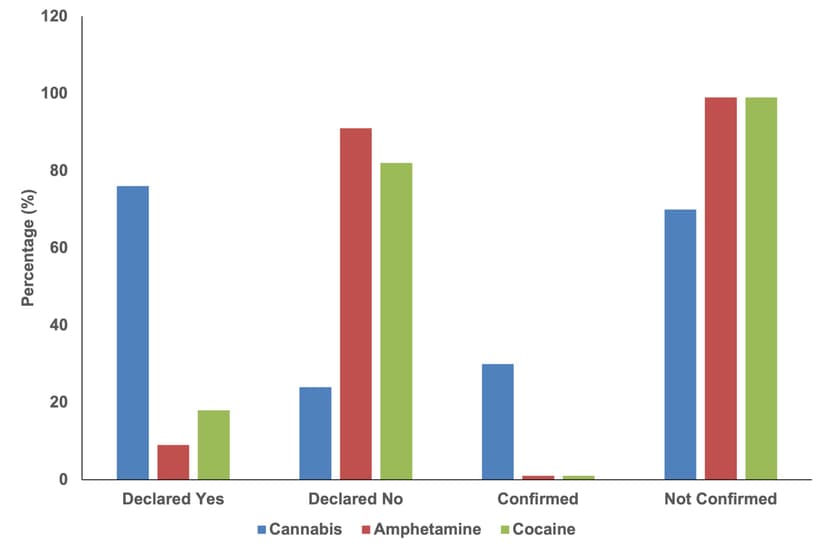
Figure 1. Discordance between self-reported psychoactive substance use and toxicological confirmation among participants
Biochemical profile of participants
Biochemical analysis (n=69) revealed abnormalities in multiple parameters. Elevated ALT was observed in 36.2% of patients, and elevated AST in 31.9%. Hyperglycemia was present in 14.5%, while 23.2% had hypoglycemia. Creatinine levels were elevated in only 2.9% of patients (Table 3).
Table 3. Assessment of biochemical parameters.
Biochemical profile by cannabis status and self-reported use frequency of participants
Patients testing positive for cannabis demonstrated significantly lower mean ALT (24.65±17.83 vs 52.50±35.17 U/L, p<0.001) and AST (23.30±20.81 vs 48.39±51.16 U/L, p=0.006) compared to cannabis-negative patients. Mean creatinine was significantly higher in cannabis-positive patients (81.17±26.66 vs 70.33±19.45 µmol/L, p=0.045). No significant differences were observed for blood glucose, red blood cell count (RBC), white blood cell count (WBC), or platelet count (PLT) (Table 4).
There is no statistically significant relationship between the frequency of cannabis use and the normality of biochemical parameters (Table 5). Also, the frequency of cannabis use is not associated with the normality of patients’ hematological parameters (p > 0.05). Frequency (whether once a day or more than three times a day) does not influence the normality of laboratory results in this study.
Table 4. Association between cannabis toxicology status and biological parameters.
Table 5. Association between self-reported frequency of cannabis use and biochemical and hematological parameters.
Association between cannabis use and hepatic and renal biomarkers in participants
Figure 2, as shown below, allows for the rapid identification of internal correlations between biological parameters and a positive cannabis test result. There is no correlation between cannabis concentration in patients who tested positive and biological parameters.
After adjusting for age, alcohol consumption, and poly-substance use (Model 2), a positive cannabis test result was associated with a decrease in log-ALT (β = -0.770, p < 0.001) and log-AST (β = -1.176, p = 0.007), while it was associated with an increase in creatinine (β =0.138, p < 0.026). No significant association was observed for blood glucose levels and cannabis positivity (Table 6).
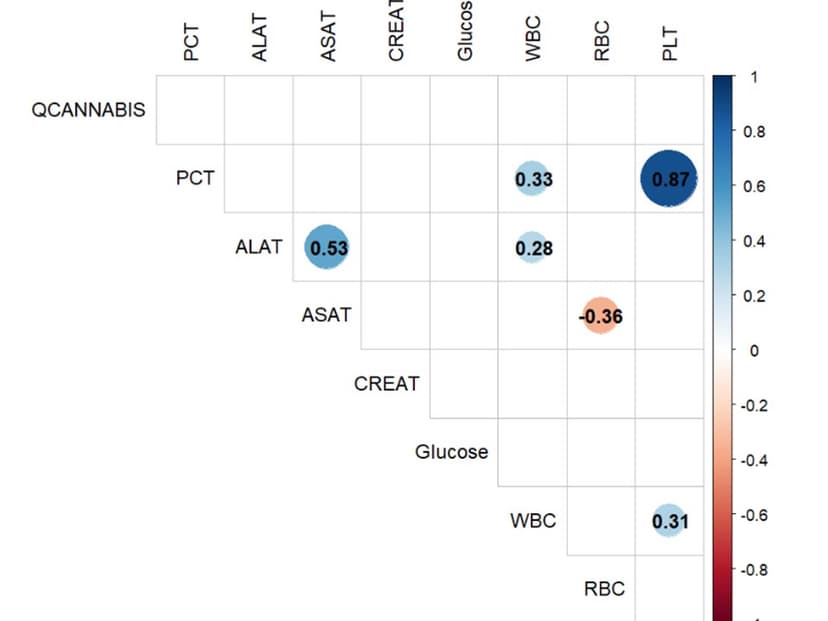
Figure 2. Spearman's correlation matrix between cannabis toxicological positivity and key biological parameters in cannabis-positive patients. RBC (g/dl), Red blood cells; WBC (103/mm3), White blood cells; CREAT (µmol/ L), creatinine; PLT (103/mm3), platelets; PCT (103/mm3), plateletcrit; ALT/AST (U/L), Transaminases; GLU (mmol/L), plasma glucose; Chi² test was used, N=69.
Table 6. Association between cannabis status and transaminases, creatinine, and plasma glucose.
DISCUSSION
To date, no study has provided a comprehensive biological and toxicological characterization of patients with PAS use disorders in Mali. The current findings reveal a predominantly young male population with high rates of polysubstance use, significant discordance between self-reported and biologically confirmed substance use, and notable biochemical abnormalities suggesting physiological impact, particularly on hepatic function.
The study population was predominantly male (97 %), and more than 80 % of patients were under 31 years of age, with a mean age of 25 years. This profile is consistent with observations made in other sub-Saharan African countries, such as that reported by J Ebrahim, J Adams [10], where prevalence ranged from 27% to 12% among young people under 24 years of age. Similarly, in Kenya, a study of street children found that their average age was 13 years. Similarly, in Burkina Faso, men constituted the majority (95%) with an average age of 27 [11]. We found that 66% of patients were from urban areas, which is slightly lower than in a previous study conducted by SP Coulibaly, H Dolo [12], which was 57%. This result suggests that gender and the urban environment, with its socioeconomic constraints and opportunities for access to substances, play a decisive role in PAS use.
Cannabis emerged as the predominant substance (76 cases), confirming its central role in substance use disorders in sub-Saharan Africa, as highlighted by several regional studies [7, 10]. The prevalence of alcohol (48 cases), tobacco (30 cases), and tramadol (28 cases) was similar to the findings reported by S Coulibaly, A Traore [8]. In another study involving 1,105 participants, tobacco ranked first at 32%, followed by cannabis and alcohol [12], while the most commonly used substances were amphetamines, cocaine, opioids, and cannabis. Similarly, the use of homemade mixtures (Phenergan and Neocodion) indicates a shift toward semisynthetic and diverted substances, increasing the complexity of treatment [13], [14].
A critical finding is discordance between self-reported use and toxicological confirmation. Only 38.6% who self-reported using cannabis tested positive, while 3 patients who tested positive reported no use. This discrepancy exceeds that reported in trauma patients [15]. This difference can be attributed to many factors, including the limited detection window of the tests, individual variability of metabolism, reporting bias, methods of administration, sample storage, the type of sample collected, and the time interval between use and testing [16-18]. This discordance underscores the limitation of relying on self-reported data alone in clinical and research settings and supports the inclusion of routine toxicological testing.
PAS are known to interfere with biological parameters. We observed changes in biochemical and hematological markers among the participants. Studies have shown that chronic intake of PAS is associated with increased ALT levels and leukocyte counts [19]. For example, alcohol consumption is known to affect CYP2E1, causing oxidative stress and hepatic inflammation, leading to increased levels of transaminases [20-22]. Accumulation of oxidative stress is linked to chronic inflammation, which can lead to liver cancer [21], [23].
The finding that cannabis positive patients had significantly lower mean transaminase levels than cannabis negative patients was unexpected and contradicts results of studies from Pakistan [24] and Iraq [25], which observed a modest elevation in AST and ALT. However, elevated transaminases were observed in 36.2% for ALT and 31.9% for AST of our overall cohort, suggesting hepatic impact. Similarly, D Guzel, AB Yazici [26] found that cannabis smokers had significant alterations in hematological parameters compared with non-smokers. The lower biochemical parameters observed in our sample could result from several co-factors, including liver enzyme inhibition, confounding factors such as diet, and individual variability. Higher creatinine in cannabis positive patients may suggest early impact on the kidneys, although within normal ranges.
Strengths of this study include the systematic biological confirmation of substance use, biochemical and hematological tests, and the focus on an underrepresented population in Sub-Saharan Africa. Nevertheless, this study has some limitations. The cross-sectional design prevents causal inference; the single-center setting limits generalizability to other Malian regions; the limited sample size may reduce statistical power for subgroup analyses; the detection window of immunoassays in urine and their susceptibility to give false-positive or false-negative results can lead to an underestimated substance use prevalence.
CONCLUSIONS
Psychoactive substance use in Mali primarily affects a young, male population that is socioeconomically and medically vulnerable. Cannabis remains the primary substance, but poly-substance use is also present. The biochemical abnormalities observed suggest the physiological impact of PAS. The discrepancy between patients’ reports and laboratory results highlights the limitations of self-assessment and the importance of toxicological testing. These findings highlight the need for a poison control center and a multidisciplinary approach integrating biological screening, psychosocial support, and prevention strategies that are adapted to the sociocultural context of Mali and Sub-Saharan Africa.
ACKNOWLEDGEMENTS
None.
AUTHOR CONTRIBUTIONS
TD and FB conceived and designed the research; MF and FB performed the research and acquired the data; MF, FB, and KK analysed the data; TD and MF interpreted the data and wrote the manuscript; and TD, SPC, and SKC had primary responsibility for the final content. All authors were involved in drafting and revising the manuscript.
CONFLICTS OF INTEREST
There is no conflict of interest among the authors.
DATA AVAILABILITY
Research data includes sensitive or confidential information such as patient data.
References
[1]
Nawi AM, Ismail R, et al. Risk and protective factors of drug abuse among adolescents: A systematic review. BMC Public Health. 2021;21:2088.
[2]
Jaguga F, Kiburi SK, et al. A systematic review of substance use and substance use disorder research in Kenya. PLoS One. 2022;17:e0269340.
[3]
Ebrahim J, Adams J, et al. Substance use among young people in sub-Saharan Africa: A systematic review and meta-analysis. Frontiers in Psychiatry. 2024;15:2024.
[4]
Zhong S, Yu R, et al. Drug use disorders and violence: Associations with individual drug categories. Epidemiol Rev. 2020;42:103-16.
[5]
Mauri MC, Cirnigliaro G, et al. Substance abuse associated with aggressive/violent behaviors in psychiatric outpatients and related psychotropic prescription. International Journal of Mental Health and Addiction. 2023;21:4071-84.
[6]
Leikin JB. Substance-related disorders in adults. Dis Mon. 2007;53:313-35.
[7]
Diallo T, Hami H, et al. Épidémiologie et facteurs de risque des intoxications volontaires au mali. Santé Publique. 2013;Vol. 25:359-66.
[8]
Coulibaly S, Traore A, et al. Étude descriptive des demandes de traitement pour usage de drogues au mali Health Res Afr. 2023;1 (3):pp 44-9.
[9]
Diallo T, Papa Coulibaly S, et al. Management of addictions at the university hospital center point g, bamako-mali. Mali Med. 2021;36:44-9.
[10]
Ebrahim J, Adams J, et al. Substance use among young people in sub-saharan africa: A systematic review and meta-analysis. Front Psychiatry. 2024;15:1328318.
[11]
Thiombiano C, Somé C, et al. Profile of psychoactive substance users: Status report after 13 months of activities at the "colibri sud" care centre. Pan Afr Med J. 2024;48:148.
[12]
Coulibaly SP, Dolo H, et al. Hospital epidemiology of psychiatric disorders in mali. Pan Afr Med J. 2022;41:160.
[13]
Orriols L, Gaillard J, et al. Evaluation of abuse and dependence on drugs used for self-medication: A pharmacoepidemiological pilot study based on community pharmacies in France. Drug Safety. 2009;32:859.
[14]
Moussadak A, Farhane H, et al. Toxicovigilance: The misuse of psychotropic drugs in morocco. Results of a survey conducted in casablanca. E3S Web of Conferences. 2021;319:01056.
[15]
Sakai LM, Esposito TJ, et al. Comparison of objective screening and self-report for alcohol and drug use in traumatically injured patients. Alcoholism Treatment Quarterly. 2012;30:433-42.
[16]
Verstraete AG. Detection times of drugs of abuse in blood, urine, and oral fluid. Ther Drug Monit. 2004;26:200-5.
[17]
Vindenes V, Yttredal B, et al. Oral fluid is a viable alternative for monitoring drug abuse: Detection of drugs in oral fluid by liquid chromatography-tandem mass spectrometry and comparison to the results from urine samples from patients treated with methadone or buprenorphine. Journal of Analytical Toxicology. 2011;35:32-9.
[18]
Meikopoulos T, Gika H, et al. Detection of 26 drugs of abuse and metabolites in quantitative dried blood spots by liquid chromatography–mass spectrometry. Molecules. 2024;29:975.
[19]
Ali RH, Edan LM, et al. Assessment of chronic drug abuse on some biochemical and hematological parameters in human: A multivariate analysis. Iraqi Journal of Science. 2025;66:4148-66.
[20]
Subramaniyan V, Chakravarthi S, et al. Alcohol-associated liver disease: A review on its pathophysiology, diagnosis and drug therapy. Toxicology Reports. 2021;8:376-85.
[21]
Liu S-Y, Tsai I-T, et al. Alcohol-related liver disease: Basic mechanisms and clinical perspectives. International Journal of Molecular Sciences. 2021;22:5170.
[22]
Yan C, Hu W, et al. Pathogenic mechanisms and regulatory factors involved in alcoholic liver disease. Journal of Translational Medicine. 2023;21:300.
[23]
Shoyshob TZ, Uddin MJ, et al. Emerging signaling pathways in toxicant-induced diseases. Toxicant Research. 2026;2:12-7.
[24]
Zeb M, Shah S, et al. Association of biochemical parameters in chronic drug addict patients; a case-control study. Pakistan Journal of Medical and Health Sciences. 2022;16:845-6.
[25]
Hussein R, Edan L, et al. Assessment of chronic drug abuse on some biochemical and hematological parameters in human: A multivariate analysis. Iraqi Journal of Science. 2025:4148-66.
[26]
Guzel D, Yazici AB, et al. Alterations of the hematologic cells in synthetic cannabinoid users. Journal of Clinical Laboratory Analysis. 2017;31:e22131.
Share and Cite
Harvard Style
Diallo, T. and Fofana, M. and Bagayoko, F. and Koloma, K. and Coulibaly, S. and Coulibaly, S., 2026, 'Toxicological and biological profile of patients with psychoactive substance use disorders at the psychiatric unit of Point G University Hospital, Bamako, Mali', Toxicant Research, vol. 2, no. 3, pp. 44-53.
ACS Style
Diallo, T.; Fofana, M.; Bagayoko, F.; Koloma, K.; Coulibaly, S.; Coulibaly, S. Toxicological and biological profile of patients with psychoactive substance use disorders at the psychiatric unit of Point G University Hospital, Bamako, Mali. Toxicant Research 2026, 2(3), 44-53. https://doi.org/10.66439/tr.2026.06
AMA Style
Diallo, T.; Fofana, M.; Bagayoko, F.; Koloma, K.; Coulibaly, S.; Coulibaly, S. Toxicological and biological profile of patients with psychoactive substance use disorders at the psychiatric unit of Point G University Hospital, Bamako, Mali. Toxicant Research. 2026;2(3):44-53. https://doi.org/10.66439/tr.2026.06
Chicago/Turabian Style
Diallo, Tidiane ; Fofana, Mahamadou ; Bagayoko, Fatoumata ; Koloma, Korotoumou ; Coulibaly, Souleymane dit Papa ; Coulibaly, Sanou Khô . 2026. "Toxicological and biological profile of patients with psychoactive substance use disorders at the psychiatric unit of Point G University Hospital, Bamako, Mali" Toxicant Research 2, no. 3: 44-53. https://doi.org/10.66439/tr.2026.06
APA Style
Diallo, T.; Fofana, M.; Bagayoko, F.; Koloma, K.; Coulibaly, S.; Coulibaly, S. (2026). Toxicological and biological profile of patients with psychoactive substance use disorders at the psychiatric unit of Point G University Hospital, Bamako, Mali. Toxicant Research, 2(3), 44-53. https://doi.org/10.66439/tr.2026.06
Article Metrics
Article Access Statistics
Article Info
Academic Editor
Md Jamal Uddin, PhD
Received
10 July 2026
Accepted
08 August 2026
Published
18 August 2026
Article DOI
10.66439/tr.2026.06Corresponding Author
Mahamadou Fofana
,Department of Pharmacology and Toxicology, National Public Health Institute of Mali, Hippodrome, Koulikoro Road—Street 235, Gate 52—Commune II, Bamako-1771, Republic of Mali
;Email: fofmahamadou@outlook.com
Cite this article
Diallo T, Fofana M, Bagayoko F, Koloma K, Coulibaly S, Coulibaly S. Toxicological and biological profile of patients with psychoactive substance use disorders at the psychiatric unit of Point G University Hospital, Bamako, Mali. Toxicant Res. 2026; 2(3), 44-53. 2026; 2(3): 44-53