Loading...
Almond leaves reveal the atmospheric origin of mercury in Mediterranean agroecosystems
Jose Antonio Rodríguez Martín
,Javier Pro
,Meaza Zenebe
,Jose Luis Gabriel
Abstract
Mercury (Hg) is a toxic trace element distinguished by its persistence and ability to circulate over long distances through the atmosphere before being deposited onto terrestrial ecosystems. As a consequence, atmospheric deposition has become an important source of Hg accumulation in soils and vegetation. Although plants have frequently been used to assess environmental contamination, agricultural tree crops have received much less attention than forest species. Almond tree (Prunus dulcis Mill.) is one of the most widespread perennial crops in Mediterranean regions, yet its potential for monitoring atmospheric Hg has rarely been evaluated under field conditions. In the present study, Hg concentrations were determined in soils, stems and leaves collected from almond orchards distributed across Mallorca Island (Spain). Mercury concentrations were consistently higher in leaves than in stems, while bioaccumulation factors remained below one and translocation factors exceeded two. The observed distribution of Hg between plant compartments suggests that atmospheric inputs contribute more strongly to foliar Hg accumulation than uptake from soils. The widespread occurrence of almond orchards throughout Mediterranean agricultural landscapes suggests that almond leaves may provide a practical and cost-effective approach for assessing diffuse atmospheric mercury pollution at regional scales.
INTRODUCTION
Environmental contamination by potentially toxic elements has become an increasing concern worldwide as a consequence of urban expansion, industrial activities, and the continuous growth of transport and energy demand [1]-[3]. Among these contaminants, mercury (Hg) occupies a particular position because its environmental behaviour differs from that of most trace elements. Elemental mercury can remain in the atmosphere for extended periods, allowing its transport over regional and even global scales before being deposited onto terrestrial and aquatic ecosystems [4], [5]. Atmospheric deposition constitutes one of the main pathways through which Hg reaches soils and vegetation [6]-[8]. Following deposition, mercury may be retained in soils, associated with organic matter or incorporated into biological compartments, where its persistence and toxicity raise environmental and public health concerns [5], [9]. The exchange of Hg between the atmosphere and terrestrial ecosystems is therefore a key component of the global mercury cycle.
Vegetation contributes significantly to this process. Plant canopies represent a large interface between the atmosphere and the biosphere and are capable of intercepting both gaseous and particulate forms of mercury. Leaves are especially important because they remain directly exposed to atmospheric inputs and can accumulate Hg through a combination of stomatal uptake and surface deposition processes [7], [10], [11]. As a result, foliar tissues often provide an integrated record of environmental exposure over the growing season. The use of plants as biomonitors of atmospheric pollution has received considerable attention during recent decades. Most studies have focused on forest species because of their wide distribution and long-term exposure to airborne contaminants [10], [12]. In contrast, much less information is available for agricultural woody crops, despite their extensive presence in many human-modified landscapes. This lack of knowledge is particularly relevant in Mediterranean regions, where perennial crops occupy large areas and frequently occur near urban areas, transportation corridors, and other diffuse emission sources.
The almond tree (Prunus dulcis Mill.) is one of the most characteristic crops of Mediterranean agroecosystems. Beyond its agronomic importance, its broad distribution offers an opportunity to investigate atmospheric contamination at regional scales. However, information concerning mercury accumulation in almond trees under field conditions remains scarce. Mallorca Island provides a suitable setting to address this question because previous studies have reported Hg enrichment in soils associated with atmospheric deposition processes, while the insular nature of the system facilitates the evaluation of diffuse pollution sources [13]. Against this background, the present work explores the distribution of Hg in almond orchards from Mallorca and examines whether foliage can serve as a useful indicator of atmospheric mercury deposition.
MATERIALS AND METHODS
Study area and sampling
The study was carried out on Mallorca Island (Spain), located in the western Mediterranean Basin. The island is characterized by a strong interaction between agricultural activities, urban development, and tourism-related infrastructures, making it a suitable environment for studying diffuse atmospheric pollution. Previous investigations have reported mercury accumulation in Mallorcan soils, suggesting the influence of atmospheric deposition processes operating at regional scales. Most almond orchards on the island are established on calcareous soils developed from limestone-derived parent materials. These soils are typically alkaline and rich in carbonates, properties that reduce the mobility and bioavailability of several trace elements, including mercury.
Nineteen sites were selected across the main almond-growing regions of the island in order to represent the spatial distribution of almond cultivation. At each location, one composite soil sample was collected from the upper 20 cm of the soil profile. Simultaneously, leaf and stem samples were obtained from five almond trees (Prunus dulcis Mill.) growing within each site. Plant samples were collected from the same branch whenever possible to minimize variability associated with tissue age and exposure conditions. After collection, samples were transported to the laboratory, dried, and homogenized prior to analysis.
Hg analysis, translocation, and bioaccumulation factors
Total mercury concentrations in soils and plant tissues were determined using a Direct Mercury Analyzer (DMA-80, Milestone). This instrument allows the direct measurement of total mercury without chemical digestion through a sequence of thermal decomposition, amalgamation, and atomic absorption spectrometry. Soil and plant samples were analysed on a dry-weight basis. All measurements were performed in duplicate. Analytical performance was checked using certified reference materials and procedural blanks. Recovery values were within the acceptable range for environmental analyses, confirming the reliability of the method.
To evaluate the relationship between mercury concentrations in soils and plant tissues, bioaccumulation factors (BAFs) were calculated separately for stems and leaves. These indices were obtained as the ratio between Hg concentration in the plant compartment and Hg concentration in the corresponding soil sample:
BAFstem = Hgstem / Hgsoil
BAFleaf = Hgleaf / Hgsoil
Values greater than one indicate efficient accumulation from the soil compartment, whereas values below one suggest limited soil-to-plant transfer.
The distribution of Hg within the plant was assessed using translocation factors (TF), calculated as: TF = Hgleaf / Hgstem
TF values above unity indicate preferential enrichment of leaves relative to woody tissues. Because foliar tissues are continuously exposed to atmospheric inputs, elevated TF values may also suggest the contribution of atmospheric deposition to mercury accumulation.
Statistical analysis
Soil properties and mercury concentrations in soils and almond tree tissues were summarized using descriptive statistics. The variability of Hg concentrations in soils and plant tissues was explored using descriptive statistics. Mean, median, and standard deviation values were calculated for each variable. Statistical calculations were performed using XLSTAT software (Addinsoft, version 2012.2.02).
RESULTS
Mercury concentrations in soils and almond tree tissues
Mercury concentrations measured in soils, stems and leaves are summarized in Table 1 and Figure 1. Soil Hg contents showed noticeable variability among sampling locations, with values ranging from 28.76 to 226.60 µg kg⁻¹ and an average concentration of 61.17 µg kg⁻¹. The median value (48.29 µg kg⁻¹) was lower than the mean, indicating the influence of several sites with comparatively elevated Hg concentrations.
Plant tissues contained lower Hg concentrations than soils; however, marked differences were observed between plant compartments. Average Hg concentration in leaves reached 28.28 µg kg⁻¹, whereas stems contained 16.19 µg kg⁻¹. The same pattern was observed for median values, confirming that foliar tissues accumulated more Hg than woody tissues across most sampling sites. Variability was also lower in plant tissues than in soils. Standard deviation values were 14.23 µg kg⁻¹ for leaves and 11.14 µg kg⁻¹ for stems, compared with 44.11 µg kg⁻¹ in soils. This suggests a more homogeneous distribution of Hg within the biological compartments than in the soil environment.
Table 1. Mercury concentrations in soil, stems, and leaves of almond trees.
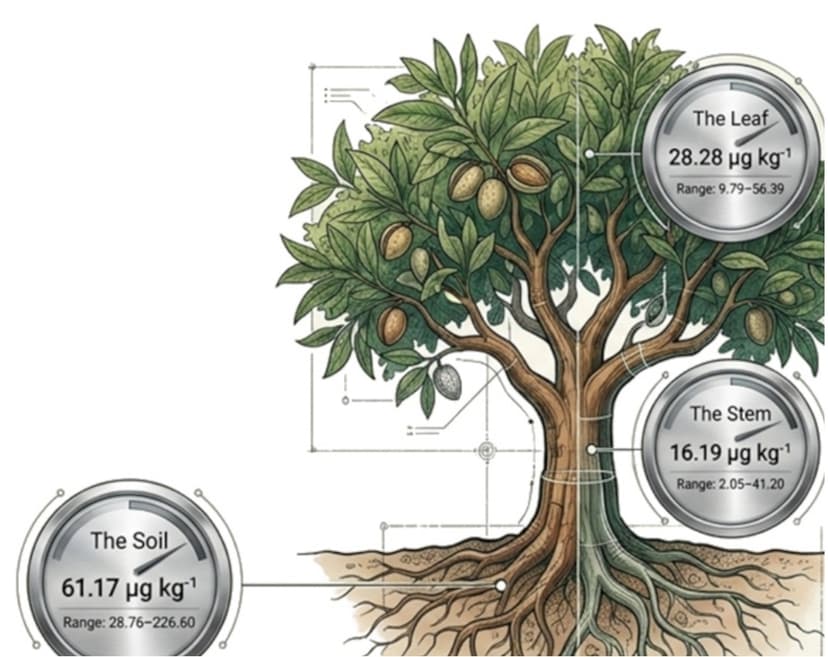
Figure 1. Distribution of mercury in soil and plant compartments (stem and leaves).
Bioaccumulation and translocation indices
The calculated transfer indices are presented in Table 2. Bioaccumulation factors remained below unity in both plant compartments, with mean values of 0.31 ± 0.23 for stems and 0.55 ± 0.33 for leaves. These results indicate that Hg concentrations in plant tissues were lower than those measured in the corresponding soils.
In contrast, the translocation factor showed a mean value of 2.63 ± 2.41, indicating that mercury concentrations were generally higher in leaves than in stems. The observed TF values reveal a clear preferential accumulation of Hg in foliar tissues.
The combined behaviour of both indices indicates contrasting patterns of Hg distribution within the soil–plant system. While soil-to-plant accumulation remained limited according to BAF values, the significant enrichment observed in leaves produced translocation factors consistently above unity.
Table 2. Bioaccumulation and translocation factors.
DISCUSSION
Mercury concentrations measured in Mallorcan soils fall within the range commonly reported for Mediterranean environments, although the average value obtained in this study (61.17 µg kg⁻¹) exceeds typical background concentrations described for many European topsoils [14]. Compared with average values reported for European agricultural soils, the concentrations observed in Mallorca suggest an additional contribution from diffuse atmospheric inputs. This interpretation is consistent with previous studies conducted on the island, where atmospheric deposition has been identified as an important source of Hg accumulation in soils [13]. An interesting feature of the dataset was the contrasting behaviour observed between soils and plant compartments (Figure 1). Despite the relatively elevated Hg concentrations measured in soils, Hg levels in plant tissues remained comparatively low, as reflected by bioaccumulation factors below unity. Such a pattern suggests that the transfer of mercury from soil to almond trees is limited under the calcareous conditions that characterize the island [15]. The high carbonate content and alkaline soil reaction are likely to reduce Hg mobility and availability for root uptake, thereby restricting its movement into aboveground biomass. A more pronounced signal emerged when leaves and stems were compared. Mercury concentrations were consistently higher in leaves, resulting in translocation factor values well above one. This recurrent enrichment of foliar tissues is difficult to explain solely through root-mediated transport. Instead, it points towards a substantial contribution from atmospheric inputs. Leaves remain continuously exposed to the atmosphere and can accumulate Hg through gaseous exchange and the deposition of airborne particles on their surfaces [16], [17]. Consequently, foliar tissues may integrate atmospheric exposure over time in a way that woody tissues do not.
Another noteworthy result was the weak correspondence between soil Hg concentrations and Hg levels measured in plant tissues. If soil uptake were the dominant mechanism, higher soil concentrations would be expected to produce a proportional increase in plant Hg content. This tendency was not evident in the present study. Instead, the observed variations among sites appear to be more compatible with diffuse atmospheric deposition acting at the landscape scale. Mercury also differed from the behaviour commonly reported for other potentially toxic elements under Mediterranean conditions. Elements such as Cd, Cr and Ni are usually controlled by soil geochemistry and often display limited mobility towards aerial plant organs [19]. In contrast, the clear foliar enrichment observed for Hg reflects the unique role of atmospheric transport in its environmental cycle and highlights the importance of air–plant interactions in controlling its distribution within almond trees.
From a practical perspective, the results support the use of almond leaves as biomonitoring tools for assessing atmospheric Hg pollution. Unlike forest species, almond trees are extensively cultivated throughout Mediterranean agricultural landscapes and are frequently located close to roads, urban areas and other sources of diffuse emissions. Their abundance, accessibility and capacity to accumulate foliar Hg make them attractive candidates for monitoring programs. Similar applications have been successfully reported for other tree species used as indicators of airborne contamination [12], [20], but information for agricultural woody crops remains scarce. The present study suggests that almond orchards could fill part of this gap and provide a complementary approach for evaluating atmospheric Hg deposition in Mediterranean regions.
CONCLUSIONS
Higher Hg concentrations were consistently observed in leaves than in stems throughout the study area. The low bioaccumulation factors obtained for both tissues indicate limited transfer of Hg from soil to plants, whereas translocation factors greater than two point to a marked enrichment of foliar tissues.
Taken together, these patterns support the view that atmospheric deposition represents the main pathway of mercury accumulation in almond leaves under the calcareous conditions of Mallorca. The weak influence of soil Hg concentrations on plant tissues further reinforces the importance of atmospheric inputs in controlling foliar Hg levels.
The widespread presence of almond orchards throughout Mediterranean regions offers an opportunity to extend biomonitoring beyond traditional forest ecosystems. Because leaves are easily accessible and respond to atmospheric Hg exposure, almond trees may provide a practical and cost-effective tool for evaluating diffuse mercury pollution in agricultural landscapes.
ACKNOWLEDGEMENTS
The authors gratefully acknowledge financial support from the Spanish Ministry of Science and Innovation through Project CGL2013-43675-P. Additional support was provided by the Research Alliance on Agricultural Greenhouse Gases (CLIFF-GRADS Scholarship).
AUTHOR CONTRIBUTIONS
Conceptualization and study design: JARM; Methodology: JP, MZ; Formal investigation: JARM, JP, MZ, JLG; Validation: JP, MZ; Data curation: JARM, JP; Formal analysis: JARM, JP; Visualization: JARM, JP, MZ, JLG; Supervision: JARM, JLG; Project administration: JARM, JLG; Resources: JARM, JLG; Writing-original draft: JARM, JP, MZ, JLG; Writing-review and editing: JARM, JP, MZ, JLG. All authors have read and approved the final version of the manuscript.
CONFLICTS OF INTEREST
There is no conflict of interest among the authors.
DECLARATION ON USING AI-ASSISTED TOOLS
During the preparation of this manuscript, the authors used artificial intelligence (AI) tools to improve readability and language quality. Following the use of technological supports, the author(s) reviewed and edited the text as required and take full responsibility for the text of the publication.
DATA AVAILABILITY
The raw data are available from the corresponding author on reasonable request.
References
[1]
Pacín C, Fernández JÁ, et al. Three decades of change in potentially toxic elements in brown algae in the northeast atlantic ocean. Environmental Science & Technology. 2025;59:10476-87.
[2]
Rodríguez Martín JA, De Arana C, et al. Impact of 70 years urban growth associated with heavy metal pollution. Environmental Pollution. 2015;196:156-63.
[3]
Ghosh P, Ghoshal A. Potentially toxic elements (ptes) in plants and animals: Environmental pathways, toxicity mechanisms, and biomonitoring insights. Environmental Quality Management. 2026;35:e70299.
[4]
Driscoll CT, Mason RP, et al. Mercury as a global pollutant: Sources, pathways, and effects. Environmental Science & Technology. 2013;47:4967-83.
[5]
Basu M. Impact of mercury and its toxicity on health and environment: A general perspective. In: Kumar N, editor. Mercury toxicity: Challenges and solutions. Singapore: Springer Nature Singapore; 2023. p. 95-139.
[6]
Uddin S, Khanom S, et al. Source and distribution of mercury in environment—a review. In: Kumar N, editor. Mercury toxicity mitigation: Sustainable nexus approach. Cham: Springer Nature Switzerland; 2024. p. 3-43.
[7]
Gerson JR, Szponar N, et al. Amazon forests capture high levels of atmospheric mercury pollution from artisanal gold mining. Nature communications. 2022;13:559.
[8]
Rodríguez Martín J, Nanos N, et al. Volcanic mercury in pinus canariensis. Naturwissenschaften. 2013;100:739-47.
[9]
Odumo B, Carbonell G, et al. Impact of gold mining associated with mercury contamination in soil, biota sediments and tailings in kenya. Environmental Science and Pollution Research. 2014;21:12426-35.
[10]
Liu Y, Liu G, et al. Understanding foliar accumulation of atmospheric hg in terrestrial vegetation: Progress and challenges. Critical Reviews in Environmental Science and Technology. 2022;52:4331-52.
[11]
Rodriguez Martin J, Nanos N, et al. Local deposition of mercury in topsoils around coal-fired power plants: Is it always true? Environmental Science and Pollution Research. 2014;21:10205-14.
[12]
Rodríguez Martin JA, Gutiérrez C, et al. Wood and bark of pinus halepensis as archives of heavy metal pollution in the mediterranean region. Environmental Pollution. 2018;239:438-47.
[13]
Rodríguez Martin JA, Gutiérrez C, et al. Trends in soil mercury stock associated with pollution sources on a mediterranean island (majorca, spain). Environmental Pollution. 2021:117397.
[14]
Panagos P, Jiskra M, et al. Mercury in european topsoils: Anthropogenic sources, stocks and fluxes. Environmental Research. 2021;201:111556.
[15]
Martin JAR, Pro J, et al. Almond trees as bioindicators of trace metal pollution in a mediterranean agricultural island. Environmental Pollution. 2026:128548.
[16]
Wohlgemuth L, Rautio P, et al. Physiological and climate controls on foliar mercury uptake by european tree species. Biogeosciences Discussions. 2021;2021:1-30.
[17]
Fernández-Gómez E, Roca-Pérez L, et al. Soil–plant transfer and environmental levels of potentially toxic elements in agricultural, urban and industrial areas of the valència region (eastern spain). Toxics. 2026;14:353.
[18]
Obrist D, Kirk JL, et al. A review of global environmental mercury processes in response to human and natural perturbations: Changes of emissions, climate, and land use. Ambio. 2018;47:116-40.
[19]
Sakizadeh M, Martín JAR, et al. Trace elements concentrations in soil, desert-adapted and non-desert plants in central iran: Spatial patterns and uncertainty analysis. Environmental Pollution. 2018;243:270-81.
[20]
Tomašević M, Aničić M, et al. Deciduous tree leaves in trace elements biomonitoring: A contribution to methodology. Ecological indicators. 2011;11:1689-95.
Share and Cite
Harvard Style
Martín, J. and Pro, J. and Zenebe, M. and Gabriel, J., 2026, 'Almond leaves reveal the atmospheric origin of mercury in Mediterranean agroecosystems', Toxicant Research, vol. 2, no. 2, pp. 18-24.
ACS Style
Martín, J.; Pro, J.; Zenebe, M.; Gabriel, J. Almond leaves reveal the atmospheric origin of mercury in Mediterranean agroecosystems. Toxicant Research 2026, 2(2), 18-24. https://doi.org/10.66439/tr.2026.03
AMA Style
Martín, J.; Pro, J.; Zenebe, M.; Gabriel, J. Almond leaves reveal the atmospheric origin of mercury in Mediterranean agroecosystems. Toxicant Research. 2026;2(2):18-24. https://doi.org/10.66439/tr.2026.03
Chicago/Turabian Style
Martín, Jose Antonio Rodríguez ; Pro, Javier ; Zenebe, Meaza ; Gabriel, Jose Luis . 2026. "Almond leaves reveal the atmospheric origin of mercury in Mediterranean agroecosystems" Toxicant Research 2, no. 2: 18-24. https://doi.org/10.66439/tr.2026.03
APA Style
Martín, J.; Pro, J.; Zenebe, M.; Gabriel, J. (2026). Almond leaves reveal the atmospheric origin of mercury in Mediterranean agroecosystems. Toxicant Research, 2(2), 18-24. https://doi.org/10.66439/tr.2026.03
Article Metrics
Article Access Statistics
Article Info
Academic Editor
Md Atikur Rahman, PhD
Received
01 June 2026
Accepted
25 June 2026
Published
29 June 2026
Article DOI
10.66439/tr.2026.03Corresponding Author
Jose Antonio Rodríguez Martín
,National Institute for Agricultural and Food Research and Technology (INIA- CSIC), Madrid, Spain
;Email: rmartin@inia.csic.es
Cite this article
Martín J, Pro J, Zenebe M, Gabriel J. Almond leaves reveal the atmospheric origin of mercury in Mediterranean agroecosystems. Toxicant Res. 2026; 2(2), 18-24. 2026; 2(2): 18-24